Play Classic Ludo Against the Computer
Classic Ludo against smart AI, plus the one thing most Ludo sites lack: race a friend live in real-time multiplayer. No download, no signup.Ludo.now is a free online Ludo site with 8 classic variants - Classic Ludo, Quick Ludo, Pachisi and more - a shared daily challenge, and real-time multiplayer that lets you and a friend race the identical dice. There's nothing to download and no account required: just roll and play below.
Other games worth playing
How to Play Classic Ludo
In a nutshell: The classic race - Roll a six, leave the yard, and bring all four tokens home. It plays with 2-4 (you vs smart AI), it's rated easy to learn, and ~25% baseline in a 4-player game - good choices roughly double it.
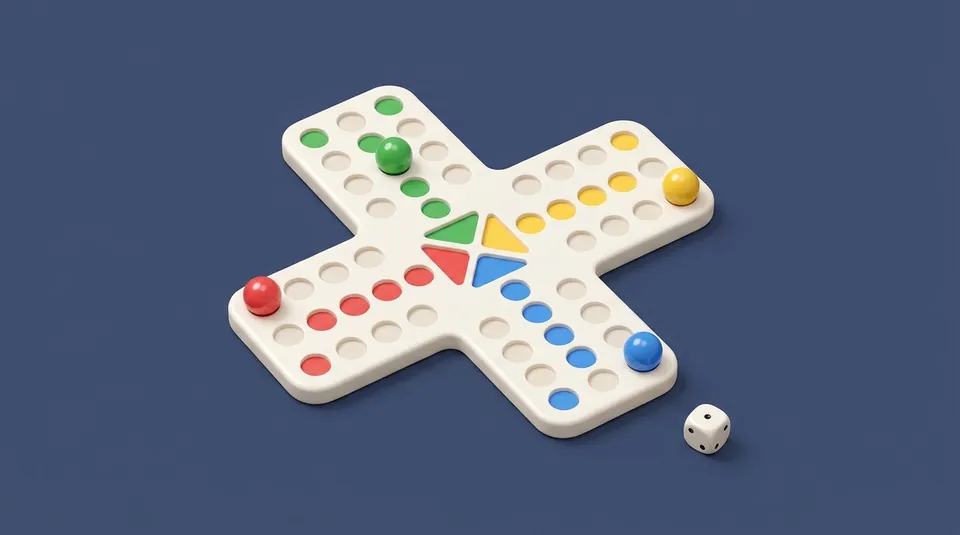
Classic Ludo is the board game everyone grew up with: four coloured yards, a cross-shaped track, one die, and a race that swings on every roll. You control the red tokens against two or three computer opponents. Roll a six to move a token out of your yard onto the track, then race it clockwise around the board toward your home column. Land on a square an opponent occupies and you send their token all the way back to its yard - and they can do the same to you. Star squares and start squares are safe ground where nobody can be captured. A six always earns another roll, but three sixes in a row ends your turn on the spot. The first player to walk all four tokens up their home column wins. Every game here is free, loads instantly, and needs no download or signup.
Classic at a glance
| Goal | Move all four tokens around the board and into your home triangle first. |
|---|---|
| Players | 2-4 (you vs smart AI) |
| Tokens | 4 per player on the 52-square cross track |
| Difficulty | Easy to learn |
| Winning odds | ~25% baseline in a 4-player game - good choices roughly double it |
| Play modes | 2 Players, 3 Players, 4 Players |
| Family | Classic |
Step by step
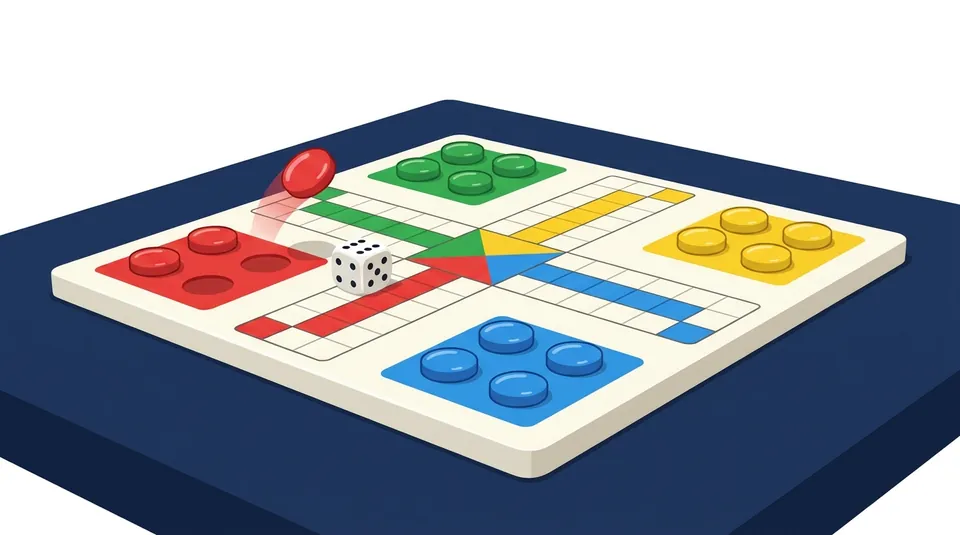
Roll a six to leave the yard
All four of your tokens start in the yard. You need a six to move one onto your start square. Rolling a six also gives you another roll, so a good opening can put a token on the track and push it forward in the same turn.
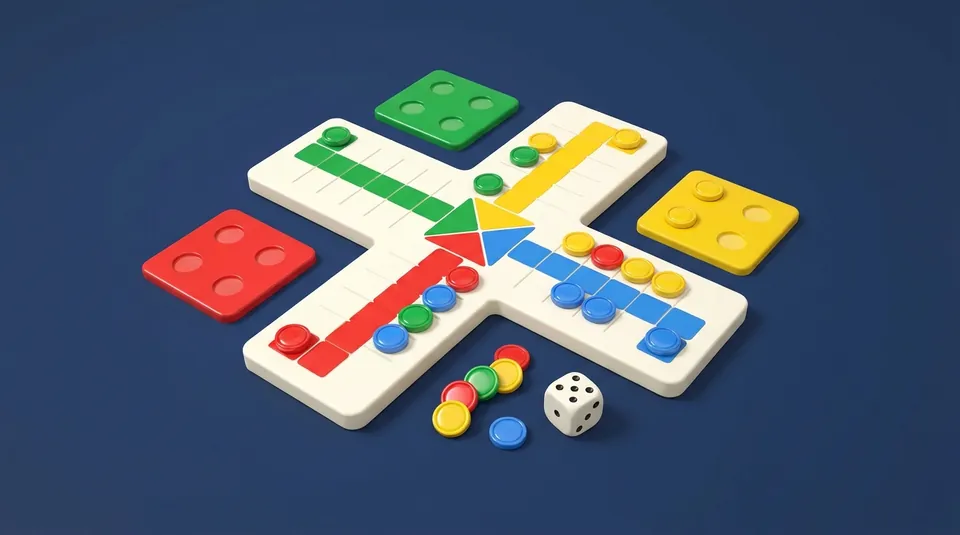
Race clockwise around the track
Each roll moves one token that many squares clockwise around the cross-shaped track. When you have more than one token out, you choose which token uses the roll - that choice is where all the skill in Ludo lives.
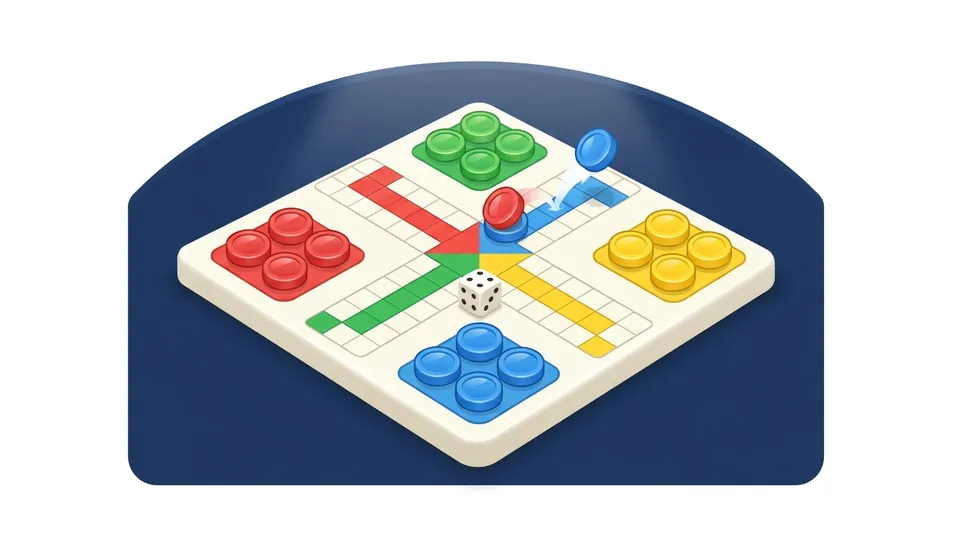
Capture opponents by landing on them
Land exactly on a square holding a single enemy token and you knock it back to its yard. It must roll a six to start over. You cannot capture tokens resting on a star square or on their own start square.
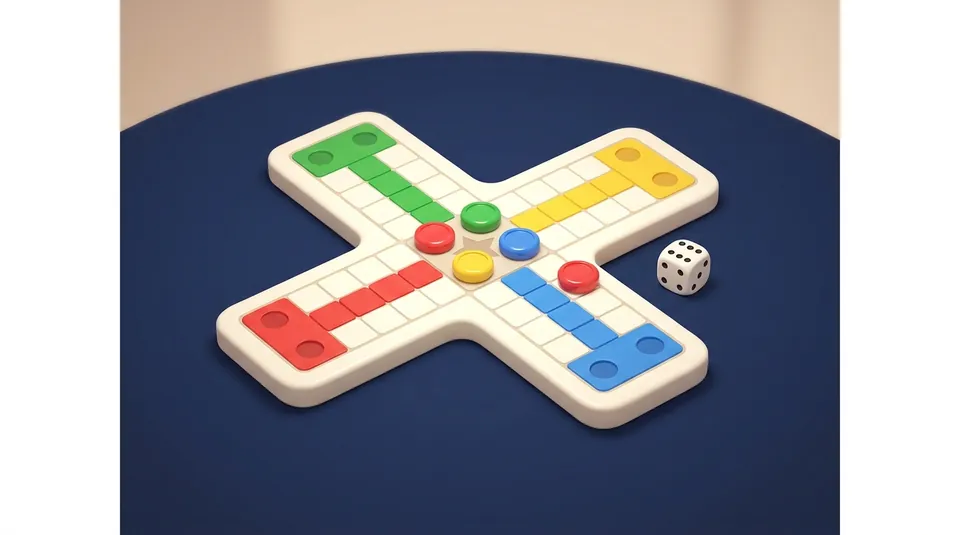
Use the safe squares
Eight squares are safe: the four coloured start squares and the four starred squares. A token parked on safe ground cannot be captured, so plan your moves to hop from one safe square toward the next when enemies are close behind.
Bring all four tokens home
After a full lap, each token turns up its own coloured home column. Home squares are private, so nothing can be captured there, but you need an exact roll to step onto the final home triangle. First player with all four tokens home wins the game.
History of Classic
Ludo descends from Pachisi, a cross-and-circle game played in India for well over a thousand years. Mughal emperors played it on garden-sized boards with courtiers as living tokens, and everyday players used a cloth cross with cowrie shells for dice. The goal then was the same as now: race your pieces around a cross and bring them home before your rivals.
In 1896 a simplified version was patented in England under the name Ludo - Latin for 'I play'. The English game swapped cowrie shells for a cubic die, fixed the board at its now-familiar 15 by 15 cross, and set the rules most of the world knows today: six to start, capture by landing, safe squares, and an exact roll to finish.
The 20th century carried Ludo everywhere. Germany reworked it into Mensch ärgere Dich nicht, America into Parcheesi, Sweden into Fia, and the Royal Navy into Uckers. Smartphone versions made it one of the most played board games on Earth, with hundreds of millions of games rolled every day.
How to Win Classic: Strategy
💡 Top tip: Spread your tokens instead of racing one. A single runner is easy to capture, and one knock-back undoes ten turns of progress. Two or three tokens on the track give every roll a useful option.
Winning tips, in order of importance
- Use your extra roll from a six to get a second token out of the yard early, not to sprint the first one further into danger.
- Count squares before you move. If an opponent sits one to six squares behind your token, you are inside capture range and should move that token or reach safe ground.
- Capture when it costs you nothing, but do not chase. A capture that drags your token deep into enemy territory often trades ten of their squares for your whole lap.
- Park on star squares when opponents are close. A turn spent safe beats a turn spent respawning in your yard.
- Watch the token just ahead of an enemy start square. When their token comes out it lands there - clear the square before it happens.
- In the endgame, walk tokens into the home column as soon as you can. A token on the track is a target; a token in the column is untouchable.
Advanced tactics for Classic
- Think in threat ranges, not single squares. Every enemy token projects a capture zone one to six squares ahead of it; the safest boards are the ones where none of your tokens stand inside any zone.
- Value tempo around your start square. Keeping one token in the yard late in the game is fine - a fresh six can drop it straight onto safe ground and force opponents near your start to scatter.
- The square 13 ahead of you is the next player's entry lane. Tokens loitering in the six squares after any start square get hit by fresh tokens more than anywhere else on the board.
- Sixes are worth about a quarter of your rolls' total distance. If a plan only works when you roll a six, it is not a plan - build positions that improve with any roll of two through five.
- Trade captures by lap position. Losing a token that has moved five squares is nothing; losing one that is 45 squares in is a disaster. Shield your veterans with your rookies.
- Slow-roll the home stretch. Because the final step needs an exact roll, stacking three tokens at the top of the board can waste turns - stagger them so different rolls finish different tokens.
- Play the players. The AI targets your most advanced token when it can - so when two of your tokens are equally useful to advance, push the one that keeps both out of immediate capture range.
Common Classic mistakes to avoid
- Racing one token while three sit in the yard. One capture erases all your progress. Fix: use sixes to bring out a second and third token before pushing the leader.
- Ignoring capture ranges. Leaving a token one to six squares ahead of an enemy invites a knock-back. Fix: count the gap after every move and step onto safe squares when the gap is six or less.
- Chasing captures deep into enemy territory. The capture feels good, but your token is now far from home and surrounded. Fix: only capture when the landing square is safe or the detour is small.
- Stacking every token at the top of the home stretch. Exact rolls are needed to finish, so bunched tokens waste turns. Fix: stagger your tokens so different roll values finish different tokens.
Classic Variations
Quick Ludo
Any roll brings a token out of the yard and only two tokens need to reach home. The same tactics at twice the pace.
Team Ludo
Four players in two fixed partnerships. Teammates never capture each other and the whole team must finish to win.
Pachisi
The Indian ancestor. Castle squares shelter any token, and the rhythm is slower and more defensive.
Parcheesi
The American cousin. Tokens enter on a five, and two tokens on one square form a blockade nothing can pass.
Mensch ärgere Dich nicht
The German classic with no safe star squares at all - every token on the track is always in danger.
Classic FAQ
How do you play Classic Ludo?
Roll a six to move a token from your yard onto your start square, then race your four tokens clockwise around the board and up your home column. Land on an enemy token to send it back to its yard. The first player to bring all four tokens home wins.
Do you need a six to start?
Yes. In Classic Ludo a token can only leave the yard when you roll a six. The six also earns you another roll. If you want a faster start, try Quick Ludo, where any roll can bring a token out.
What happens when you roll a six?
You move as normal, then roll again. There is no limit on twos through fives, but three sixes in a row ends your turn immediately and the third six is lost.
How does capturing work?
If your token lands exactly on a square occupied by a single enemy token, that token is captured and returns to its yard. It must roll a six to re-enter. Tokens on star squares or their own start square cannot be captured.
What are the safe squares?
The four coloured start squares and the four star squares. Tokens standing on them cannot be captured. The home column is also completely private - opponents can never enter it.
Do I need an exact roll to finish?
Yes. A token must land exactly on the home triangle. If the roll is too big, that token cannot use it and you must move another token or pass.
How many players is Classic Ludo for?
Two, three, or four. On Ludo.now you play red and the computer plays the other colours. Use the mode tabs to pick a 2, 3, or 4-player game.
Is Ludo all luck?
No. The dice are luck, but choosing which token uses each roll is skill. Spreading tokens, counting capture ranges, and timing your home run swing far more games than the die does.
How long does a game take?
A 2-player game usually takes 5 to 10 minutes. A full 4-player game runs 15 to 25 minutes. Quick Ludo cuts that roughly in half.
Can I play Classic Ludo free?
Yes. Every game on Ludo.now is free, with no download, no install, and no signup. Your stats save in your browser, and a free account syncs them across devices.
Can two of my tokens share a square?
In Classic Ludo, yes - your own tokens can stack on the same square, and a stack of two blocks enemy captures on that square in many house rules. For full blockade rules, try Parcheesi or Uckers.
What is the fastest way to get better?
Play the daily challenge. Everyone gets the same dice sequence, so your finishing time measures pure decision-making - compare it on the leaderboard and study what faster players do differently.
Classic guides & strategy
Still have a question about Classic Ludo? Browse the full Ludo FAQ, look up a term like blockade or safe square in the Ludo glossary, or compare Classic with the other games in the rules for every Ludo variant.
Last updated .
More Ludo Games
Why Ludo.now?
Ludo.now is built for people who actually play: instant games, smooth animations, smart hints, fair seeded dice, and per-game statistics that live in your browser. Every classic is here - Quick Ludo, Team Ludo, Pachisi, Parcheesi and more - Plus something almost no Ludo site has: real online multiplayer, where you and a friend race the exact same dice sequence on different devices. Browse the full list of free Ludo games, or check the Ludo FAQ if you're new to the game.
Want to sharpen your game first? Start with our answers on how to win Ludo more often and whether Ludo is luck or skill, or read the 4,000-year story of where Ludo comes from.
Common questions about Ludo.now
Is Ludo.now free?
Yes, completely. Every game, the daily challenge, multiplayer races and the leaderboards are free. There is nothing to buy, no download and no install - the games run right in your browser.
Do I need to download or install anything?
No. Ludo.now runs in any modern browser on desktop, tablet or phone. Open the page and the board is ready to play in about a second.
Is Ludo.now safe to use?
Yes. The site uses a secure HTTPS connection, asks for no personal information to play, and shows no third-party ads or trackers. An account is optional and only stores your email and game records.
What makes Ludo.now different from other Ludo sites?
Real-time online races. You can share a room code with a friend and race the exact same dice sequence head to head, with live progress bars and chat - plus eight rule-accurate variants, a shared daily challenge and global leaderboards.
Who made Ludo.now?
Ludo.now is built by a small team of board-game fans who also run Solitaire.now and other free game sites. We play the daily challenge ourselves, every day.
Types of Ludo
"Ludo" isn't a single game - It's the most famous member of the cross-and-circle family, a group of race games played for well over a thousand years. All of them share the same skeleton: four players, four tokens each, and a cross-shaped track that everyone races around before turning up a private home column. What changes between variants is everything that makes the race feel different - what you throw (one die in Classic, two dice in Parcheesi and Uckers, six cowrie shells in Pachisi), how tokens leave the yard (a six in Classic, a five in Parcheesi, any roll in Quick, a one or a six in Fia), where you are safe (eight squares in Classic, twelve castles in Pachisi, nowhere at all in Mensch ärgere Dich nicht), and whether two of your tokens can wall off a square entirely (the blockades of Parcheesi and the barriers of Uckers). Those rule changes swing the whole personality of the game, from gentle family race to naval knife-fight. Understanding which branch a variant belongs to tells you almost immediately whether it will be a relaxing five-minute break, a defensive chess match, or a capture-heavy brawl.
Classic
The game most people picture when they hear "Ludo" - the 1896 English refinement of Indian Pachisi that conquered the world's living rooms. Six to start, captures on open ground, safe stars, and a race that stays tense to the last exact roll.
- Classic Ludo - The classic race - Roll a six, leave the yard, and bring all four tokens home. (Easy to learn.)
Fast & Casual
Speed variants strip out the waiting. Tokens enter on any roll and the win condition is shorter, so games finish in the time it takes to drink a coffee - Perfect for a quick break that still rewards good choices.
- Quick Ludo - Ludo at double speed - Any roll leaves the yard, and two tokens home wins. (Fast & forgiving.)
Team Play
Partnership Ludo turns the free-for-all into two-versus-two. Your partner's tokens are safe from yours, and nobody wins until the whole team is home - So helping your teammate matters as much as running your own race.
- Team Ludo - Two versus two - Partners share the race and never cut each other down. (Coordination matters.)
Historic Roots
The ancestors. Pachisi was played on cloth crosses in India centuries before Ludo existed, with castle squares, partnerships and cowrie-shell dice. Our adaptation keeps its patient, defensive rhythm on the modern board.
- Pachisi - The royal game of India - Throw six cowrie shells and shelter in castles. (The ancestor of them all.)
World Variants
Everywhere Ludo travelled, it changed. America added blockades and a five to enter, the Royal Navy added mixy-blobs and messdeck trash talk, Germany removed every safe square, and Sweden let tokens out on a one. Same board, very different games.
- Parcheesi - America's Ludo - Two dice, blockades, and bonus moves of 20 and 10. (Blockades change everything.)
- Uckers - The Royal Navy's Ludo - Two dice, barriers, and the famous mixy-blob. (Naval-grade aggression.)
- Mensch ärgere Dich nicht - Germany's favourite board game - No safe stars, no mercy, don't get annoyed. (Pure knockabout.)
- Fia - Sweden's Fia med knuff - Enter on a one or a six and push your way home. (Nordic and nimble.)
Which Ludo should I play?
Not sure where to start? Match the game to your mood:
New to Ludo
Begin with Classic Ludo against two AI players, or ease in with Quick Ludo, where any roll leaves the yard. Both teach the core race-capture-and-home loop without punishing early mistakes.
Defensive and thoughtful
Play Pachisi. Twelve castle squares turn the race into a game of shelter-to-shelter planning - The thinking person's Ludo, and the oldest.
A quick five-minute game
Reach for Quick Ludo: one token starts on the track, any roll enters, and two tokens home wins. Nothing in the family finishes faster.
The hardest challenge
If you want to be humbled, try Mensch ärgere Dich nicht or Fia - No safe squares anywhere, so every token you own is a target on every enemy turn.
Play with a friend
Ludo was never meant to be played alone. Jump into online multiplayer and race someone head-to-head on the exact same dice, live.
Ready to dig deeper? Our complete rules hub explains every game above in full - Goals, legal moves, captures and strategy - And if you'd rather test your skills against everyone else, take on today's daily challenge, a single shared dice sequence that resets at midnight UTC.