Play Parcheesi
America's Ludo - Two dice, blockades, and bonus moves of 20 and 10.How to Play Parcheesi
In a nutshell: America's Ludo - Two dice, blockades, and bonus moves of 20 and 10. It plays with 2-4 (you vs AI), it's rated blockades change everything, and doubles roll again - but a third doubles sends your lead pawn home.
Parcheesi is America's classic take on Pachisi, and our version now plays it the real way: with two dice. Every throw gives you two moves - one pawn per die, split between two pawns or stacked on the same one. Pawns leave the nest on a five, either straight on one die or as 4 and 1 or 3 and 2 combined. Doubles earn another throw, and when all four of your pawns are out, doubles move the tops and the bottoms of the dice: four moves worth 14 squares. A third doubles in a row sends your lead pawn back to the nest. Capture an enemy pawn and you win a bonus move of 20 squares; bring a pawn home and you earn 10 more. Two of your pawns on one square wall the track completely. You play red against a smart AI, free in your browser, with no download and no signup.
Parcheesi at a glance
| Goal | Enter on a five, split two dice between your pawns, and wall squares with blockades. |
|---|---|
| Players | 2-4 (you vs AI) |
| Tokens | 4 per player on the 52-square cross track |
| Difficulty | Blockades change everything |
| Winning odds | Doubles roll again - but a third doubles sends your lead pawn home |
| Family | World Variants |
Step by step
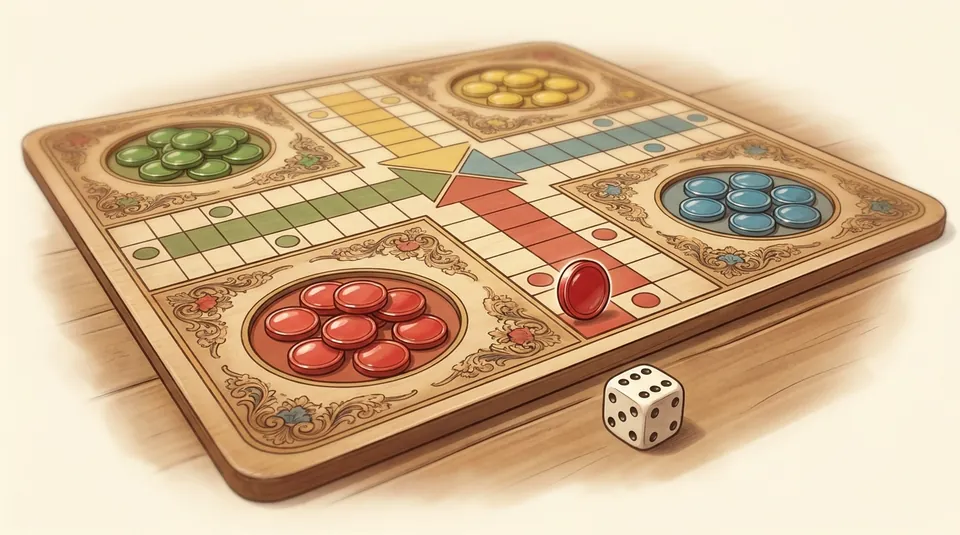
Leave the nest on a five
All four pawns start in the nest and need a five to come out. A five on either die opens the door, and so does a pair adding up to five - 4 and 1, or 3 and 2 - though the combined entry spends both dice. An entering pawn even captures an enemy parked on your start square.
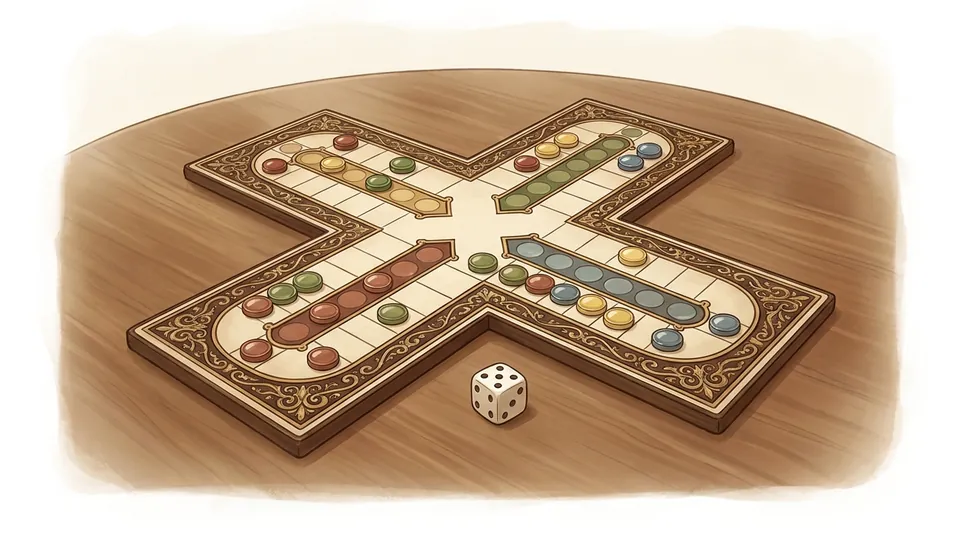
Throw two dice, make two moves
Each die moves one pawn its own number of squares. You may give one die to each of two pawns, or feed both to a single pawn as two separate steps. A die that no pawn can legally use is simply lost, so keep your pawns spread where every number has work.
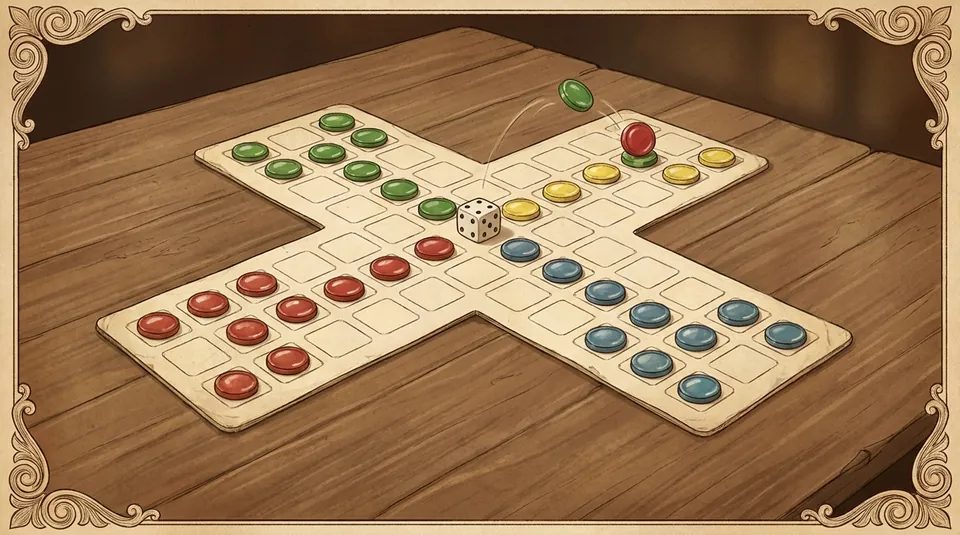
Ride your doubles - carefully
Doubles always earn another throw. When all four of your pawns are out of the nest, doubles get richer: you move the tops and the bottoms of both dice, four moves totalling 14 squares. But a third doubles in a row sends your lead pawn straight back to the nest and ends your turn.
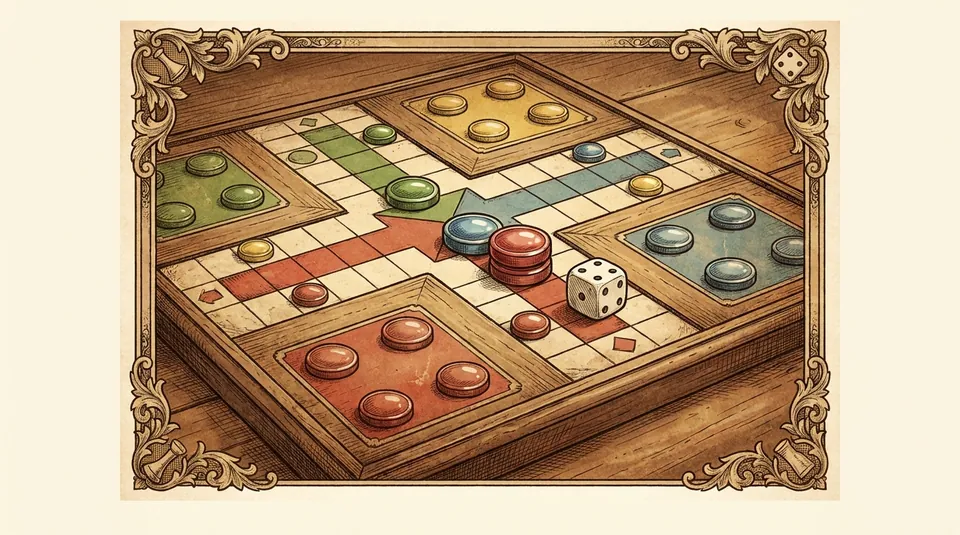
Wall the track with blockades
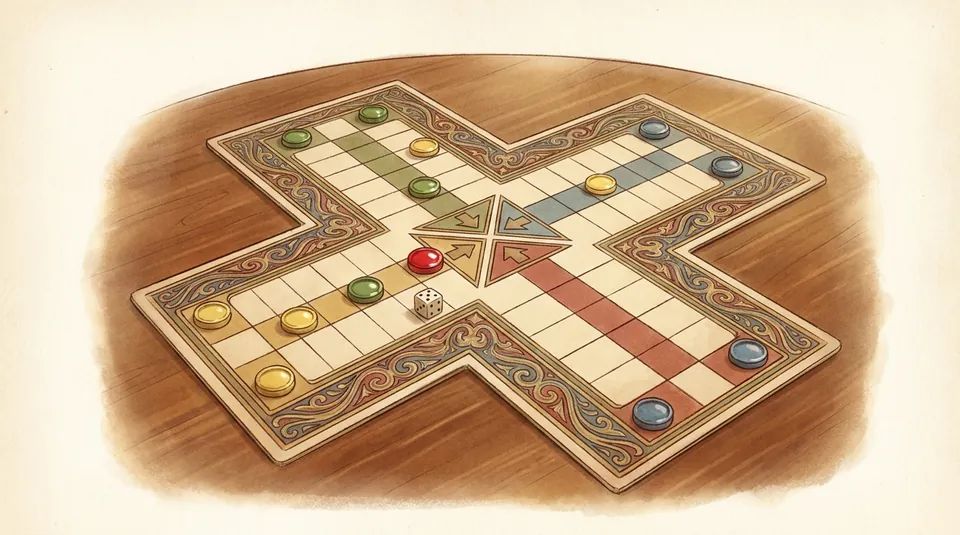
Move two of your own pawns onto one square and you have built a blockade. Nothing may land on that square or pass over it - enemy pawns, and your own pawns too, all stop dead until you break the pair. Well-placed walls choke the board; badly placed ones choke you.
Cash your bonuses and finish
Capturing an enemy pawn earns a bonus move of 20 squares for any one pawn at the end of your turn, and bringing a pawn home earns 10 the same way. If no pawn can use a bonus, it is lost. The last square demands an exact count, and all four pawns home takes the game.
History of Parcheesi
Parcheesi is the American member of the Pachisi family. The game crossed from India to the United States in the 19th century, and the name Parcheesi received a US trademark in 1874, one of the earliest protected board game names in the country. The trademark passed to Selchow & Righter, the New York firm whose famous red box stayed in print for more than a hundred years.
Along the way Parcheesi became one of the best-selling board games in American history, and it stayed closer to the Indian original than English Ludo did. Two dice thrown together, entry on a five, walls of paired pawns, a 20-square reward for a capture, and doubles that let a player move the hidden faces of the dice - generations of American families learned those rules at the kitchen table.
Our version now plays them all. You throw the traditional two dice, enter on fives, earn the real 20-square capture bonus and 10-square home bonus, and swing the full tops-and-bottoms doubles move - on the modern Ludo cross, against a smart AI, in any browser.
How to Win Parcheesi: Strategy
💡 Top tip: Split your dice with purpose. Two short moves that both end on safe squares often beat one long move into open ground, and pawns advancing in pairs keep every future number useful.
Winning tips, in order of importance
- Drop a blockade just past an enemy start square. Their entering pawns stack up behind your wall, and every turn they spend stuck is a turn you spend racing.
- Break your wall before it turns on you. A blockade stops your own trailing pawns and wastes your own dice too, so once it has done its job, march the pair onward.
- Pick the pawn for your 20 before you capture. The bonus arrives at the end of the turn, so know in advance where twenty squares lands - a safe square is the dream target.
- Never rest on an enemy start square while their nest holds pawns. One five and their entering pawn removes yours on the spot, and no safe-square rule will save you.
- Empty your nest early. The four-move, 14-square doubles bonus only fires with all four pawns out, and a full board of your pawns gives both dice good work every turn.
- Count the wider danger band. With two dice an enemy can reach a pawn up to twelve squares ahead of it, so check both single numbers and sums before you stop somewhere exposed.
Advanced tactics for Parcheesi
- Track danger with both dice in mind. A single die threatens from one to six squares back, and split or stacked dice stretch that reach to twelve - but a blockade standing between you and a hunter cancels every one of those numbers, because nothing passes a wall.
- Count forfeited dice as points you scored. Every die an opponent cannot legally use is half a turn stolen from them, and a well-placed blockade in a busy lane wastes their numbers turn after turn.
- The 14-square doubles turn is the biggest single swing in the game, and it only switches on when your nest is empty. Empty it early: with all four pawns out, every doubles pays four moves plus a fresh throw, roughly two turns for the price of one.
- Respect the third-doubles clock. Two doubles in a row means the next pair drags your lead pawn - the one nearest home - all the way back to the nest. The further your leader has travelled, the more that jackpot streak stands to cost you.
- Plan the landing of your bonuses before you earn them. The capture 20 and the home 10 both vanish if no pawn can use them, and your own walls or a nearly finished board are the usual culprits. Keep one pawn on open track as the designated bonus runner.
- Hold a pawn in the nest as a loaded threat when enemies crowd your start square. A natural five on one die enters the pawn, captures anything sitting on your start, and still leaves the second die free - the cheapest ambush in the game.
- Judge captures by total swing. Knocking back a pawn forty squares into its lap erases their whole journey and hands you 20 bonus squares - a sixty-square turnaround in one move - while capturing a fresh entry wins you the bonus and little else.
Common Parcheesi mistakes to avoid
- Feeding both dice to one runner every turn. A lone leader draws every hunter on the board, and one capture undoes both dice worth of progress turn after turn. Fix: split the dice and advance in pairs.
- Keeping a blockade up after it stops earning. Your wall halts your own rear pawns and wastes your own numbers too. Fix: break the pair the moment fewer enemy pawns than yours are stuck behind it.
- Capturing with nowhere to spend the 20. The bonus is forfeited if no pawn can use it, and walls or finished pawns often kill it. Fix: check which pawn takes the 20 before you take the capture.
- Leaving pawns in the nest all through the midgame. Doubles only pay the 14-square, four-move bonus when all four pawns are out. Fix: spend early fives on entries until your nest is empty.
Parcheesi Variations
Uckers
The Royal Navy's rowdy cousin, built around the same blockade warfare. If walling the track is your favourite Parcheesi weapon, Uckers sharpens it further.
Classic Ludo
The standard game on our homepage: one die, entry on a six, no blockades and no bonus moves. A cleaner ruleset that shows how much Parcheesi's extras change the race.
Pachisi
The shared Indian ancestor, thrown with six cowrie shells instead of dice. Its castles protect pieces the way Parcheesi's blockades protect squares.
Quick Ludo
A sprint format where any roll enters a token and two finishers win. Handy when a full two-dice Parcheesi battle is more time than you have.
Mensch ärgere Dich nicht
Germany's cheerfully cruel variant with no safe squares on the track at all. Fans of Parcheesi's entry capture will enjoy its constant danger.
Parcheesi FAQ
How do you play Parcheesi on Ludo.now?
Throw two dice each turn and move your pawns clockwise around the cross, one pawn per die or both dice on one pawn. Enter from the nest on a five, build blockades with paired pawns, and collect bonus moves for captures and homecomings. First player with all four pawns home wins.
How do the two dice work?
Each die is its own move. You can send two different pawns forward, or move one pawn twice, one die at a time. If a die has no legal move anywhere, it is forfeited - which is exactly what a good enemy blockade tries to force.
How do pawns get out of the nest?
On a five. Either die showing a five brings out a pawn, and so does a pair totalling five, like 4 and 1 or 3 and 2 - the combined entry uses up both dice. The entering pawn captures any enemy sitting on your start square.
What happens when you throw doubles?
You always throw again. And if all four of your pawns are out of the nest, doubles unlock four moves: the tops of both dice plus the bottoms, which always total 14 because opposite die faces add up to seven.
Is there a penalty for too many doubles?
Yes. A third doubles in a row is punished: your lead pawn - the one closest to home - goes back to the nest and your turn ends at once. There is no three-sixes rule in Parcheesi; the doubles rules carry both the reward and the sting.
How does the capture bonus work?
Send an enemy pawn back to its nest and you earn a bonus move of 20 squares at the end of your turn, given to any one of your pawns. If no pawn can legally use the full 20, the bonus is forfeited.
Do I get a bonus for reaching home?
Yes. Each pawn that arrives home earns you a bonus move of 10 squares for any one of your pawns, under the same terms as the capture bonus: spend it at the end of the turn or lose it.
How do blockades work?
Two of your own pawns on the same square seal it. No pawn from any player - including you - may land on that square or pass it. The wall stands until you move one of the pair off.
Which squares are safe?
The eight marked squares: four coloured starts and four stars. A pawn on one cannot be captured, with a single famous exception - a pawn entering from the nest takes any enemy on its start square, safe or not.
Do I need an exact count to finish?
Yes. A pawn steps into home only on the exact number, whether the move comes from a die or from a bonus. A number too big must go to another pawn or be given up.
How many players is Parcheesi for?
Two, three, or four. You always play the red pawns against smart AI opponents, chosen with the mode tabs - or you can face real people in online multiplayer.
Can I play Parcheesi for free?
Yes, completely. It runs in your browser with nothing to download and no signup. Your stats live in your browser, a free account syncs them across devices, and the daily challenge and leaderboards are open to everyone.
Parcheesi guides & strategy
- Ludo vs Parcheesi - what's different?
- Can two tokens share a square?
- More Ludo answers in the full FAQ
Still have a question about Parcheesi? Browse the full Ludo FAQ, look up a term like blockade or safe square in the Ludo glossary, or compare Parcheesi with the other games in the rules for every Ludo variant.
Last updated .