Play Team Ludo
Two versus two - Partners share the race and never cut each other down.How to Play Team Ludo
In a nutshell: Two versus two - Partners share the race and never cut each other down. It plays with 4 in fixed pairs (2v2), it's rated coordination matters, and teams win or lose together - one strong runner is not enough.
Team Ludo is the classic race played as a true partnership: you and an ally against two opponents. You control the red tokens, a computer partner plays yellow, and together you face the team of green and blue. All the Classic rules apply - roll a six to leave the yard, earn an extra roll for every six, lose your turn on three sixes in a row, and land by exact count to finish. Eight safe squares still shelter tokens from capture. The twist is the goal: your team wins only when all eight tokens, your four and your partner's four, reach home. Teammates can never capture each other - landing on your partner's token simply shares the square. That one rule changes everything, because guarding yellow's runners and clearing threats from their path matters as much as moving your own. Free in your browser, with no download and no signup.
Team at a glance
| Goal | You and your AI partner race the rival pair - first team fully home wins. |
|---|---|
| Players | 4 in fixed pairs (2v2) |
| Tokens | 4 per player on the 52-square cross track |
| Difficulty | Coordination matters |
| Winning odds | Teams win or lose together - one strong runner is not enough |
| Family | Team Play |
Step by step
Know your team
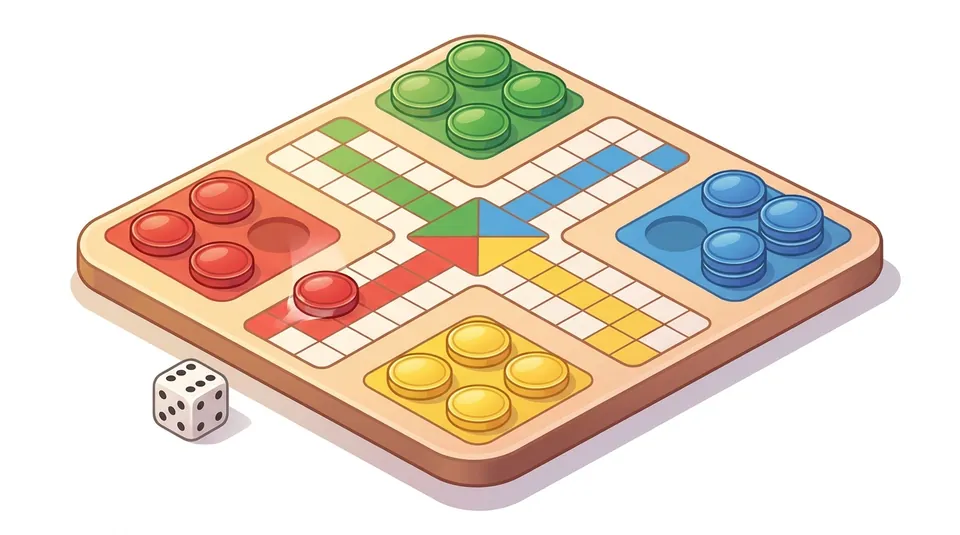
Team Ludo is two against two: you control red, a computer partner controls yellow, and you face the allied team of green and blue. Partnerships are fixed for the whole game - you win together or lose together.

Play by the Classic rules
Everything you know from Classic Ludo applies. Roll a six to move a token out of the yard, take an extra roll after every six, and lose your turn if you roll three sixes in a row. Tokens race clockwise and need an exact roll to finish.
Share squares with your partner
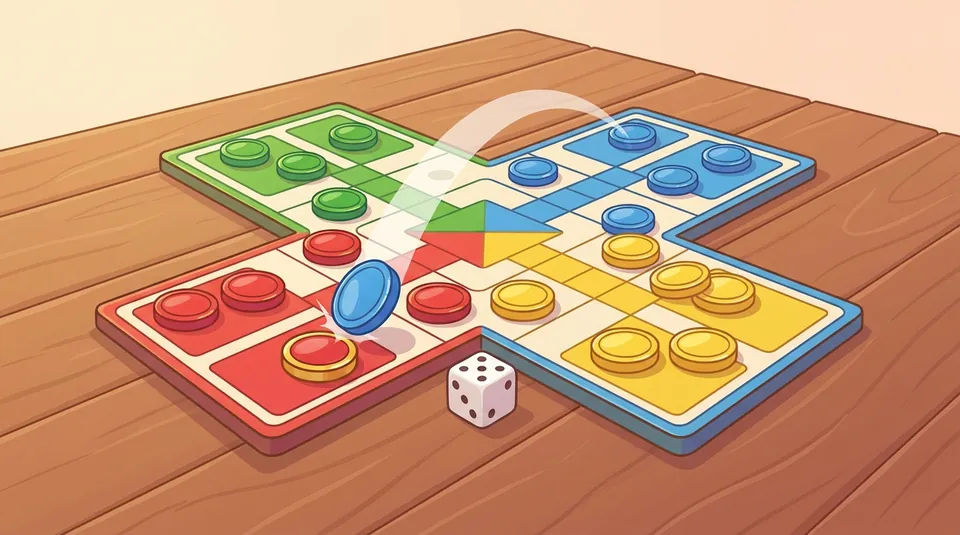
You can never capture yellow, and yellow can never capture you. If your token lands on a square your partner occupies, the two simply share it. Only green and blue tokens are captured by landing on them - and they can capture you and your partner right back.
Use the eight safe squares
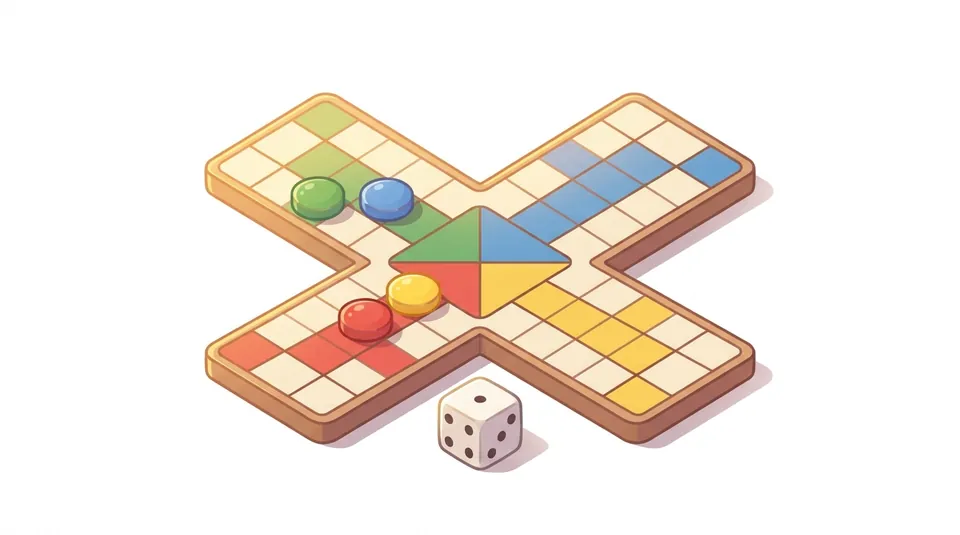
The four coloured start squares and the four star squares protect any token standing on them. Steer your runners - and keep an eye on your partner's - from one safe square toward the next whenever enemy tokens prowl behind.
Bring all eight tokens home
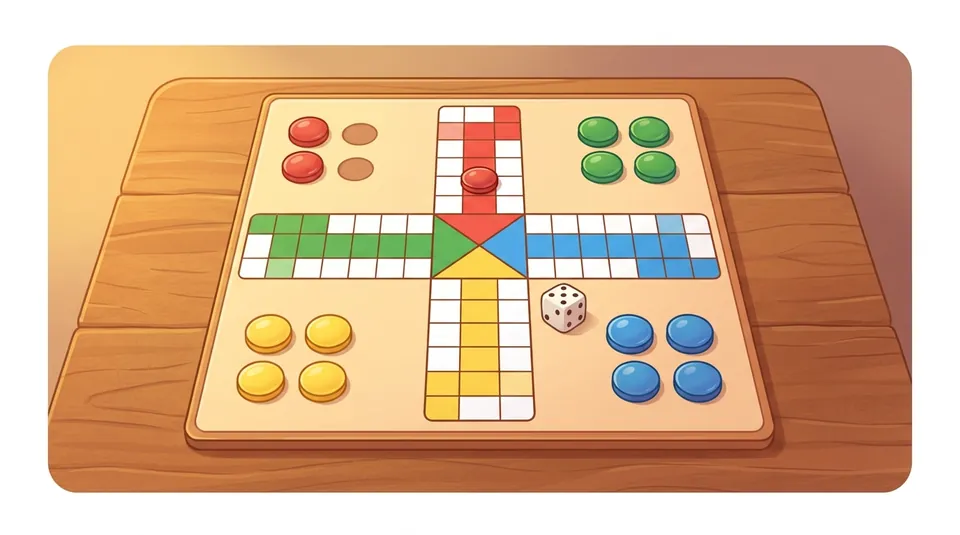
Your team wins only when every red and every yellow token has climbed its home column - all eight of them. If green and blue land their eight first, you lose. Finishing your own four is only the halfway mark, so help your partner the whole way.
History of Team
Partnership play is older than Ludo itself. Pachisi, the great cross-and-circle game of India, was traditionally a four-player partnership contest: yellow and black on one side, red and green on the other, racing around a board of embroidered cloth. Partners pooled their fortunes completely - a side won only when both players had brought every piece home, and skilled pairs would hold pieces back on purpose to guard a struggling partner.
When Ludo was patented in England in 1896, the partnership rules were left behind. The Victorian version made every colour play for itself, and that solo race is the game that spread through schoolrooms and family kitchens across the world. Team play never quite died, though: house rules kept pairing the colours up, and cousins like Uckers, the Royal Navy's version, were often fought out two against two in ships' messes.
Online play brought the partnership back for good. Ludo's mobile boom in the 2010s made two-versus-two a headline mode, joining friends and strangers into teams of shared fortune. Team Ludo on Ludo.now follows that thread all the way back to the cloth boards of India: fixed partners, no friendly fire, and victory only when all eight tokens are home.
How to Win Team: Strategy
💡 Top tip: Judge every roll by the team's slowest token. You win when all eight tokens are home, so a move that unsticks your partner's laggard often beats one that pushes your own leader.
Winning tips, in order of importance
- Capture the enemies stalking yellow. A green token one to six squares behind your partner's runner threatens your win just as much as one behind you - knock it back when you can.
- Never count your partner as danger. Yellow cannot capture you and you cannot capture yellow; landing together just shares the square. When you scan for threats, only green and blue matter.
- Cover the corners your partner cannot. Red and yellow enter the track at different points, so your captures reach squares yellow's tokens rarely do. Patrol the board as a team instead of bunching in one quarter.
- Keep a fighter on the track late in the game. If you rush all four of your tokens home, green and blue can hunt yellow without fear - one active token that threatens captures shields your partner better than a fast personal finish.
- Spread your own tokens too. All the Classic wisdom holds: two or three tokens on the track give every roll options, and a lone runner is easy prey for a team that hunts in pairs.
- Slow down at the finish. Exact rolls are needed for the home triangle, and your team has eight tokens to land - stagger yours at different distances so fewer turns go to waste.
Advanced tactics for Team
- The team's critical path runs through its worst token. Game length is set by the last of eight finishers, so value moves by how much they shrink the team's total remaining distance, not by how good they feel for red.
- Every enemy setback counts double. Green and blue also need all eight tokens home, so a capture on either colour delays their whole team - prefer knocking back the enemy side's most advanced token, whichever colour owns it.
- You cannot lend your partner dice, but you can lend safety. Clear capture threats from the six squares behind yellow's runners, and hold ground that makes enemy tokens think twice before entering yellow's path.
- Trade up for the team. Sacrificing a fresh red token to capture a green veteran deep into its lap is a fine deal, even though solo Ludo instinct says never volunteer for the yard.
- Guard the approach to yellow's home column in the endgame. Enemy tokens loitering there pick off your partner's runners on their final stretch - a red escort or a timely capture keeps that lane clear.
- Manage the six economy as a pair. Extra rolls are your only burst of tempo, so spend them bringing out fresh tokens when yellow is under siege, or sprinting your own laggard once yellow's tokens are safe.
- Read your AI partner and fill the missing role. When yellow runs aggressively, become the bodyguard who trails behind and captures; when yellow's tokens are pinned near their yard, take the lead and draw the enemy team's attention onto red.
Common Team mistakes to avoid
- Playing solo Ludo with a partner attached. Racing your own four tokens and ignoring yellow loses to any team that cooperates. Fix: before every move, check whether a capture or escort helps your partner more than the same roll helps you.
- Treating your partner's tokens as obstacles. Some players route around yellow as if a collision were dangerous. Fix: remember that teammates share squares - move through and past yellow freely, and count only green and blue as threats.
- Sprinting all four tokens home early. Once red is finished, green and blue can hunt yellow with nothing to fear. Fix: keep at least one red token active late in the game to threaten captures and screen your partner's runners.
- Capturing whatever is nearest instead of what matters. Knocking back a fresh enemy token barely slows a team that needs eight home. Fix: spend your captures on the enemy side's most advanced tokens, especially any that threaten yellow.
Team Variations
Pachisi
The ancestor of them all, and the original partnership game - played in fixed teams on cloth boards in India centuries before Ludo existed. Its castle squares reward the same patient teamwork.
Uckers
The Royal Navy's version, traditionally battled out in pairs in the mess. Its fierce blockade rules give partners even more ways to protect each other and trap the enemy.
Classic Ludo
The solo version of the rules you already know. Ideal for sharpening your personal race craft when there is no partner to look after.
Quick Ludo
The opposite mood: any roll enters the track and only two tokens need to finish. A five-minute solo sprint between team matches.
Parcheesi
The American branch of the Pachisi family. Entering on a five and forming two-token blockades will feel natural to anyone who already thinks in pairs.
Team FAQ
How do you play Team Ludo?
It is Classic Ludo in fixed partnerships of two against two. You play red with a computer partner on yellow, against the team of green and blue. Standard rules apply - six to enter, extra roll on a six, captures, safe squares, exact rolls to finish - but your team wins only when all eight of its tokens are home.
Who is my partner?
Yellow. On Ludo.now you always control red, and a smart AI plays yellow at your side. Green and blue, also played by the AI, form the opposing partnership.
Can I capture my partner's tokens?
No, and your partner cannot capture yours. If a red token lands on a square holding a yellow token, the two share the square peacefully. Captures only ever happen between the two teams.
How does my team win?
By bringing all eight team tokens home - your four red tokens and your partner's four yellow ones. If the green and blue team lands its eight tokens home first, your team loses.
What happens if I finish all my tokens first?
Your team has not won yet. The game continues until yellow's tokens are home too, which is why a selfish sprint can backfire - keeping a token active to guard your partner is often the stronger plan.
Do I still need a six to leave the yard?
Yes. Team Ludo uses the full Classic rules: only a six moves a token out of the yard, a six earns another roll, and three sixes in a row ends your turn.
What are the safe squares in Team Ludo?
The usual eight - the four coloured start squares and the four star squares. Tokens on them cannot be captured, and every home column stays private to its own colour.
Is Team Ludo harder than Classic Ludo?
It asks different questions. The dice and captures are the same, but you must weigh your partner's position on every move, which adds a layer of judgement Classic does not have. Many players find it the most strategic variant on the site.
How long does a Team Ludo game take?
Usually a little longer than a Classic four-player game, since all eight tokens on one team must finish. Expect somewhere around 20 to 30 minutes.
Where does team play in Ludo come from?
From Pachisi, Ludo's Indian ancestor, which was traditionally played in fixed partnerships - yellow and black against red and green - on embroidered cloth boards. Team Ludo revives that original spirit.
Can I play Team Ludo free?
Yes. Everything on Ludo.now is free in your browser - no download, no install, no signup. Your stats save in the browser, and a free account syncs them across devices.
How do I get better at Team Ludo?
Practise thinking in eight tokens instead of four. Then test yourself on the daily challenge, where every player gets the same dice, compare results on the leaderboard, or take your teamwork into an online multiplayer race.
Team guides & strategy
Still have a question about Team Ludo? Browse the full Ludo FAQ, look up a term like blockade or safe square in the Ludo glossary, or compare Team with the other games in the rules for every Ludo variant.
Last updated .