Play Pachisi
The royal game of India - Throw six cowrie shells and shelter in castles.How to Play Pachisi
In a nutshell: The royal game of India - Throw six cowrie shells and shelter in castles. It plays with 2-4 (you vs AI), it's rated the ancestor of them all, and grace throws of 6, 10 and 25 repeat your turn - twelve castles keep you safe.
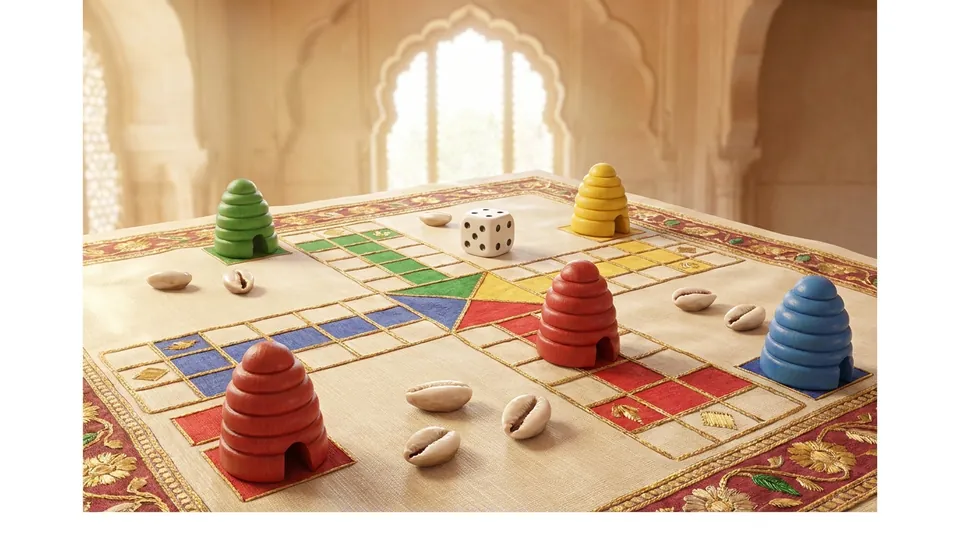
Pachisi is the royal race game of India, and our version now throws it the traditional way: with six cowrie shells instead of a die. The shells that land mouth up count your move. Two to six mouths up move a piece that many squares, a single mouth up scores 10, and no mouths at all scores 25 - the throw the game is named after. Throws of 6, 10 and 25 are graces: a grace can bring a fresh piece in from the yard, and you always throw again after one. Your first piece may enter on any throw, but every later piece must wait for a grace. Twelve castle squares shelter pieces from capture, capturing an enemy earns another throw, and pieces finish at the charkoni in the centre, where any big throw carries them the rest of the way home. You play red against smart AI, free in your browser, no signup.
Pachisi at a glance
| Goal | Throw cowries (2-6, 10 or 25), enter on graces, and race all four pieces around the cross. |
|---|---|
| Players | 2-4 (you vs AI) |
| Tokens | 4 per player on the 52-square cross track |
| Difficulty | The ancestor of them all |
| Winning odds | Grace throws of 6, 10 and 25 repeat your turn - twelve castles keep you safe |
| Family | Historic Roots |
Step by step
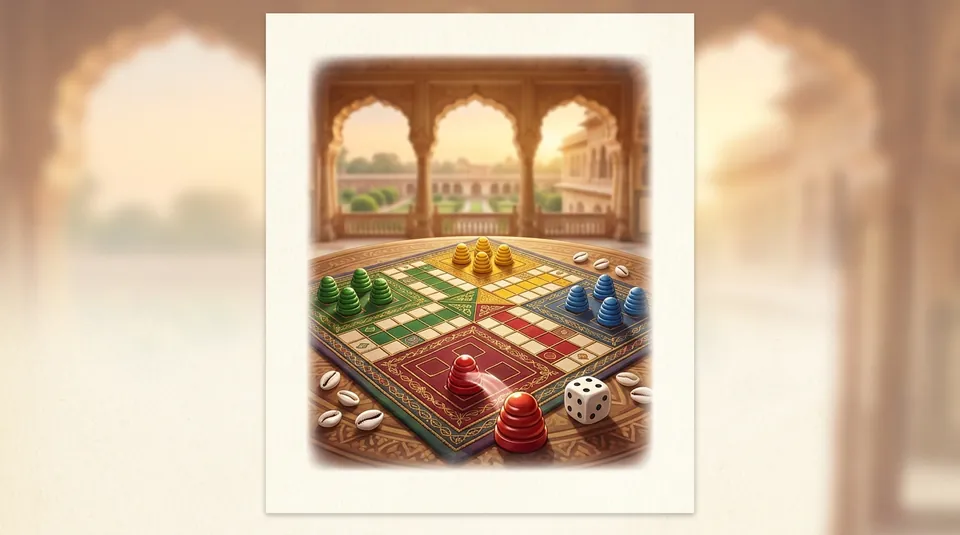
Throw six cowrie shells
Instead of rolling a die, you toss six cowrie shells and count how many land mouth up. Two, three, four, five or six mouths move a piece that many squares. Exactly one mouth up scores 10, and zero mouths up scores 25, the biggest throw in the game.
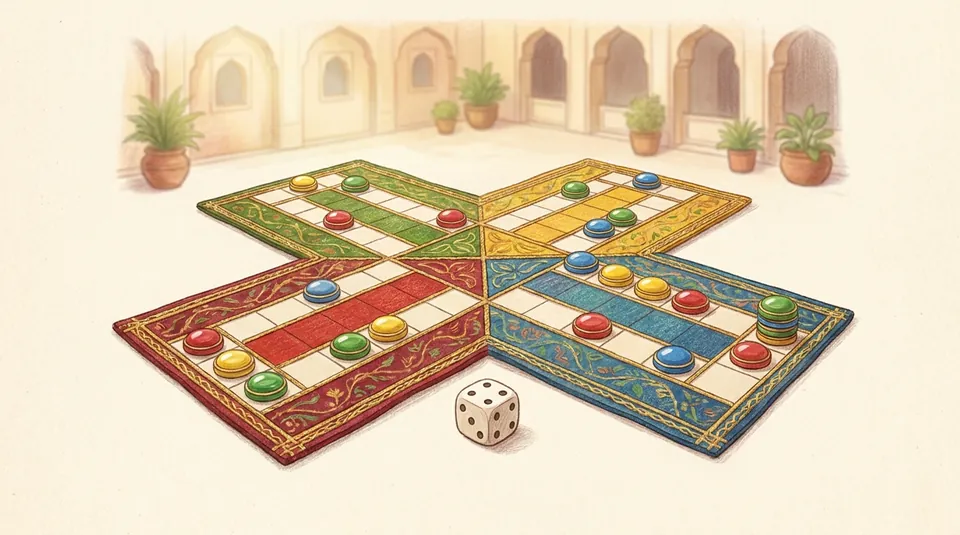
Enter the board with graces
Throws of 6, 10 and 25 are called graces. Your first piece may walk out of the yard on any throw, but every piece after it needs a grace to enter. A grace also wins you another throw, so opening the gate never slows you down.
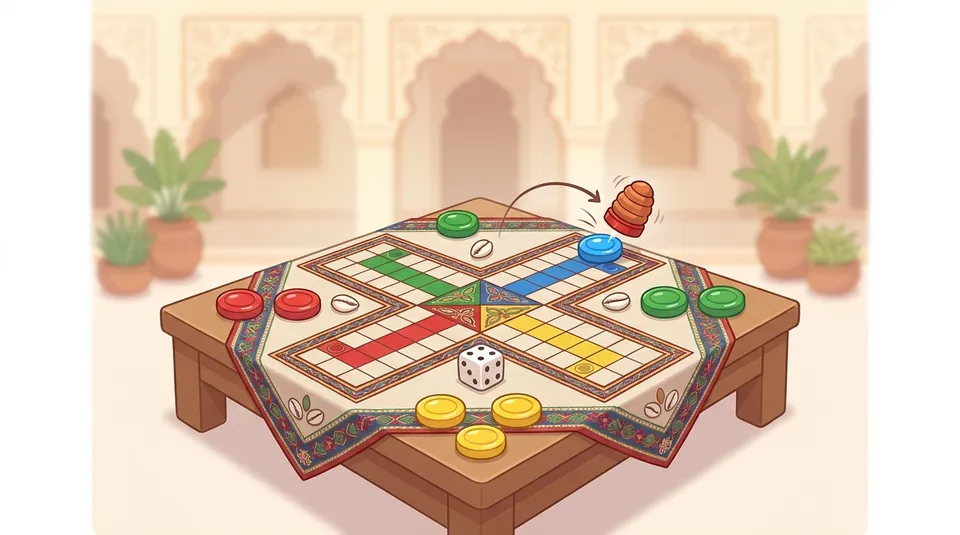
Pick the piece for each throw
Every throw moves one piece clockwise around the cross. Once several pieces are on the track you choose which one takes the number, and since throws range from 2 all the way to 25, matching the right piece to the right distance is the heart of the game.
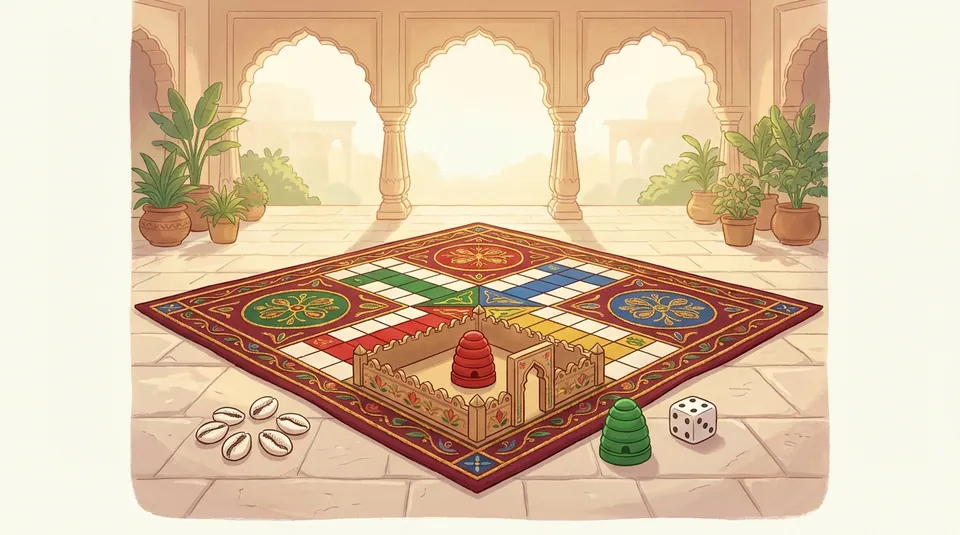
Hold the twelve castles
Twelve castle squares guard the track: the four starts, the four stars, and four more spaced evenly around the loop. A piece resting on a castle cannot be captured, so careful players travel castle to castle like stepping stones across a river.
Capture, then bring them home
Land on an enemy piece outside a castle and it returns to its yard - and you throw again. Pieces finish at the charkoni in the centre of the board, and since cowrie throws skip the number 1, there is no exact count: a throw larger than the distance left still carries the piece home.
History of Pachisi
Pachisi grew up in India, where records of the game reach back well over a thousand years - and popular tradition calls it 4,000 years old. It was played on a cross embroidered on cloth, each arm three columns of squares wide, with beehive-shaped pieces and six cowrie shells for throws. Partners sat across from each other, two against two, and the game's name comes from 'pachis', Hindi for twenty-five, its highest throw.
Its grandest stage was the court of the Mughal emperor Akbar in the 16th century. At Fatehpur Sikri he had life-sized Pachisi courts laid into the palace stone, where he threw the shells himself while attendants in coloured robes walked the squares as living pieces. Visitors can still stand on those courts today.
When the game travelled west it was tamed: England cut it down to Ludo, America boxed it as Parcheesi, and the cowrie shells were swapped for dice. Our Pachisi hands the shells back. The board is the modern cross rather than the three-column cloth, but the six cowries, the graces, the twelve castles and the rethrows for captures all play just as the old game asks.
How to Win Pachisi: Strategy
💡 Top tip: Travel castle to castle. With twelve safe squares spread around the loop, most throws can end on stone - a piece that always sleeps in a castle is nearly impossible to lose.
Winning tips, in order of importance
- Enter on your graces. Only a 6, 10 or 25 lets a piece after your first onto the board, and the rethrow that follows a grace means entering costs no tempo - so open the gate while your yard is full.
- Save the giant throws for open ground. A 25 wasted shuffling between nearby castles hurts; a 25 that leaps a piece across a dangerous stretch, or home from far away, wins games.
- Capture whenever the extra throw has work to do. A hit hands you a bonus throw, and a bonus throw that reaches a castle or enters a piece doubles the profit.
- Remember there is no throw of 1. A piece sitting exactly one square ahead of an enemy cannot be hit this turn, which makes that odd little square a hiding place all its own.
- Do not grow roots in a castle. Shelter wins no races; once the hunters behind you have passed, march on toward the next stone.
- Push your finishers without fear. There is no exact count at the charkoni, so any healthy throw ends a piece's journey - hanging back near home only invites trouble.
Advanced tactics for Pachisi
- Learn the shape of the shells. Each shell lands mouth up about half the time, so 3 is the most common throw, with 2 and 4 close behind, while 10 and 25 are rare windfalls. Plan around the small numbers and treat the giants as gifts.
- Count threat distances the cowrie way. An enemy can reach you only at exactly 2, 3, 4, 5, 6, 10 or 25 squares, so gaps of 1, 7, 8 or 9 are dead ground where no single throw can touch you.
- Stack your rethrows. Graces and captures both grant another throw, and they chain - a 25 into a capture into a 10 can empty your yard and cross half the board while your rivals sit still.
- Weigh a capture by the miles it erases. Knocking home a piece on its final arm wipes out a whole lap and hands you a throw; knocking a fresh entry mostly wastes your landing square.
- Watch enemy yards like a hawk. A player with pieces still at home is starving for graces, and every 6, 10 or 25 they throw will likely open their gate - so the lane past their start grows dangerous right after their graces.
- Pace the castles by throw size. The stones sit a few squares apart, and the common throws of 2 to 4 hop between neighbours, so the risky moments are the longer gaps that only a 5 or 6 can bridge - cross those while the hunters are far away.
- Exploit the loose finish. Because the charkoni accepts any oversized throw, a piece past the last castle is nearly home the moment a 10 or 25 appears - the AI knows this and hurries its runners there, so strike before they turn the corner.
Common Pachisi mistakes to avoid
- Squatting in castles while the race runs on. A sheltered piece scores nothing, and turtling players finish last. Fix: leave the stone as soon as the pieces hunting you have moved past.
- Spending graces on movement while your yard stays full. Later pieces enter only on a 6, 10 or 25, so wasted graces starve your army. Fix: bring a new piece out with most graces until all four are on the board.
- Burning a 25 on a short errand. The game's biggest throw is rare and wins races when it leaps danger or finishes a piece. Fix: give giant throws to the piece with the longest, riskiest road ahead.
- Playing for exact counts that do not exist. Waiting near home for a perfect number wastes turns, because any big enough throw finishes a piece. Fix: push finishers forward and let the charkoni catch them.
Pachisi Variations
Classic Ludo
The English simplification that conquered the world: one die, eight safe squares, six to start. Play it on our homepage when you want the familiar rhythm.
Parcheesi
America's branch of the family, now played here with its true two dice, blockades and 20-square capture bonus. Louder and more confrontational than its patient parent.
Team Ludo
Two partnerships of two, the closest cousin to Pachisi's traditional paired play. Nobody wins until their whole team is home.
Quick Ludo
A short-format race where any roll enters a token and two home tokens win. A palate cleanser between long shell-throwing sessions.
Fia
Sweden's folk version of the chase. Its rhythm sits somewhere between Ludo's speed and Pachisi's caution.
Pachisi FAQ
How do you play Pachisi on Ludo.now?
Throw six cowrie shells and move a piece by the count: 2 to 6 mouths up move that many squares, one mouth scores 10, none scores 25. Graces of 6, 10 and 25 bring new pieces out and earn rethrows, twelve castles give shelter, and the first player to walk all four pieces to the charkoni wins.
How do the cowrie shells work?
Six shells are tossed and the ones landing mouth up count. Two, three, four, five or six mouths move exactly that far. The odd scores are the old game's magic: exactly one mouth up counts 10, and zero mouths up counts 25.
What is a grace?
A grace is a throw of 6, 10 or 25. It allows a new piece to enter the board from the yard, and after any grace you throw again. Graces are the engine of the game - they feed your army and stretch your turns.
How do pieces enter the board?
Your first piece may come out on any throw at all. Every piece after that can only enter on a grace - a 6, 10 or 25 - so opening your yard is a real event, not a formality.
Why is the game called Pachisi?
From 'pachis', the Hindi word for twenty-five: the top throw of the shells, scored when all six land mouth down. Naming the game after its best throw tells you how much the old players prized it.
What are castle squares?
The twelve safe squares: the four coloured starts, the four stars, and four more placed evenly around the track. A piece standing on a castle cannot be captured, no matter who passes by.
What happens when I capture a piece?
The enemy piece goes back to its yard to wait for another grace, and you immediately throw again. A capture is both a setback for them and extra fuel for you.
Do I need an exact throw to finish?
No. Cowrie throws have no 1, so demanding exact counts would strand pieces forever. In our adaptation any throw of the remaining distance or more brings a piece home to the charkoni at the centre.
Is this the traditional Pachisi board?
The shells, graces and castles are the real thing; the board is adapted. Traditional Pachisi is played on an embroidered cloth cross whose arms are three columns wide, while our version runs on the modern cross board that Ludo players know.
How old is Pachisi?
It is often called 4,000 years old, and the documented record in India stretches back well over a thousand years. Either way it is the grandparent of Ludo, Parcheesi and the whole family of cross-and-circle race games.
How many players is Pachisi for?
Two, three or four. You always guide the red pieces against smart AI opponents, and the mode tabs set the table size. Online multiplayer lets you throw the shells against real people too.
Can I play Pachisi for free?
Yes - free in your browser, with no download and no signup. Stats are stored in your browser, a free account carries them across devices, and the daily challenge and leaderboards cost nothing either.
Pachisi guides & strategy
Still have a question about Pachisi? Browse the full Ludo FAQ, look up a term like blockade or safe square in the Ludo glossary, or compare Pachisi with the other games in the rules for every Ludo variant.
Last updated .