Play Fia Board Game
Sweden's Fia med knuff - Enter on a one or a six and push your way home.How to Play Fia
In a nutshell: Sweden's Fia med knuff - Enter on a one or a six and push your way home. It plays with 2-4 (you vs AI), it's rated nordic and nimble, and two entry rolls mean far less waiting in the yard.
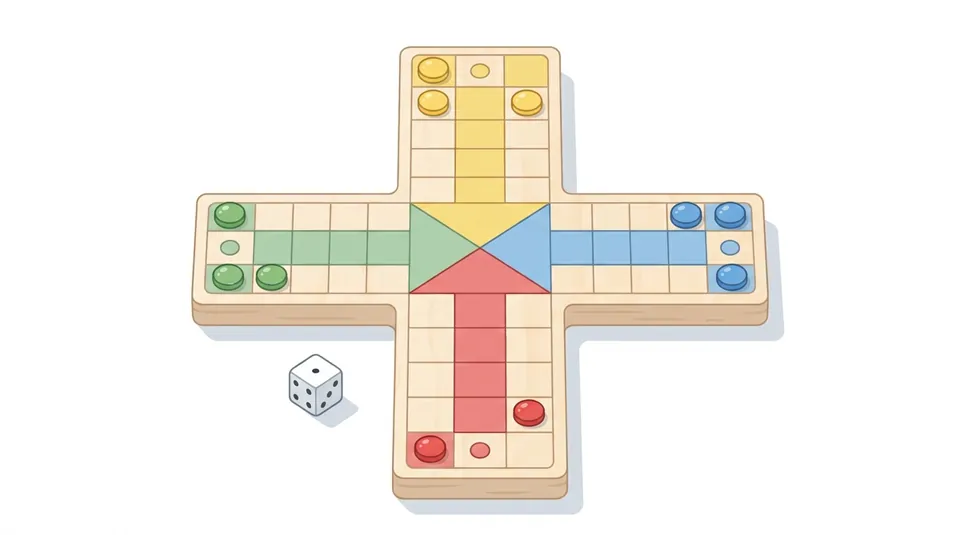
Fia is Sweden's beloved take on Ludo, played here on the same 52-square cross board. Its full name, Fia med knuff, means 'Fia with a push', and pushing is the heart of the game. A token may leave the yard on a one or a six, so the race begins quickly and the track fills fast. There are no safe squares at all, and two of your own tokens can never share a square, which means every piece stays exposed from its first step to its last. Land exactly on an enemy token and you knuff it back to its yard. A six earns an extra roll, and there is no three-sixes penalty to cut a hot streak short. Each token needs an exact roll to step home, and the first player to bring all four home wins. You play red against the AI, free in your browser, no download or signup.
Fia at a glance
| Goal | Enter the track on a one or a six, then push rivals off squares on your way home. |
|---|---|
| Players | 2-4 (you vs AI) |
| Tokens | 4 per player on the 52-square cross track |
| Difficulty | Nordic and nimble |
| Winning odds | Two entry rolls mean far less waiting in the yard |
| Family | World Variants |
Step by step
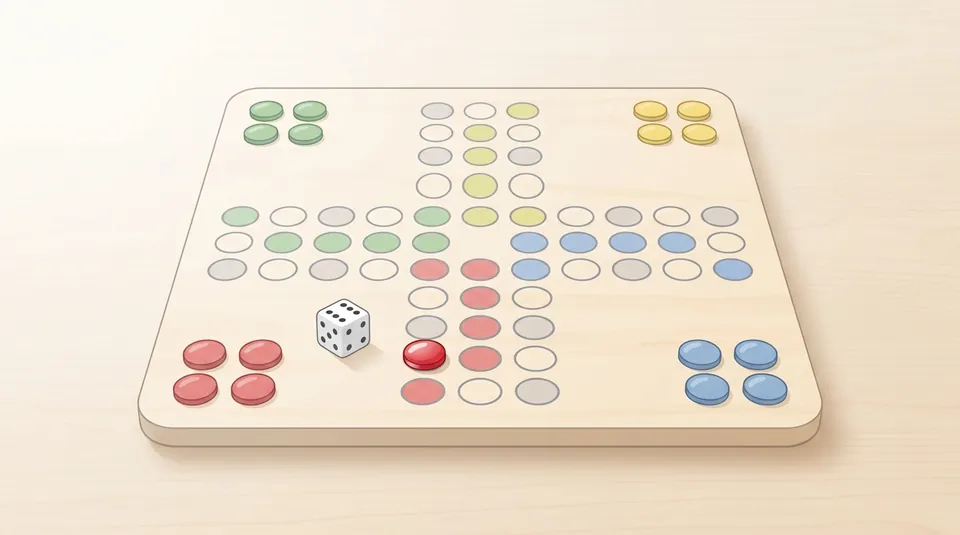
Leave the yard on a one or a six
Each of your four tokens starts in the yard, and a roll of one or six moves one of them onto your start square. That is twice as many entry numbers as Classic Ludo allows, so expect all four colours on the track within a few turns. A six still earns you another roll on top.
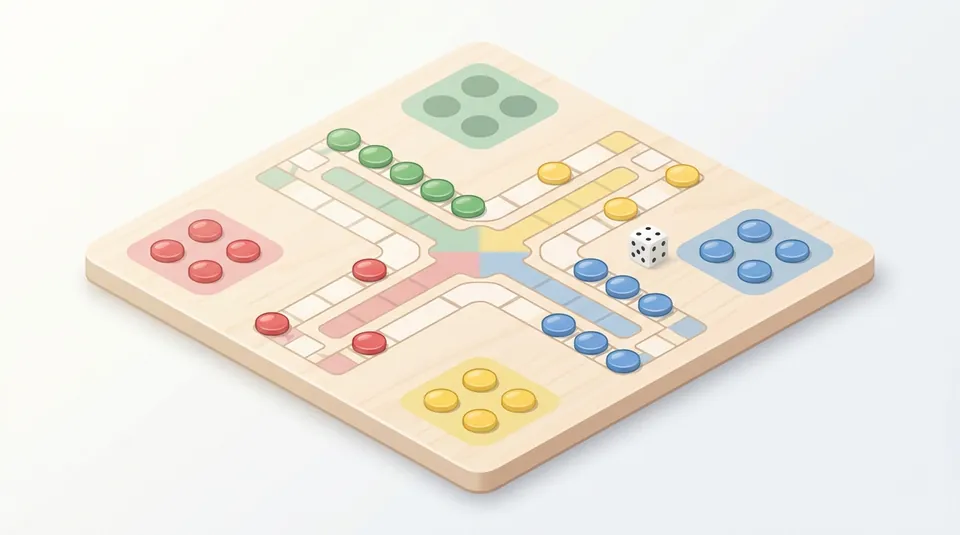
Race clockwise round the cross
Every roll moves one token that many squares clockwise along the shared 52-square track. Because two of your own tokens can never stand on the same square, a move that would land on your own piece is not allowed - choose another token or another plan.
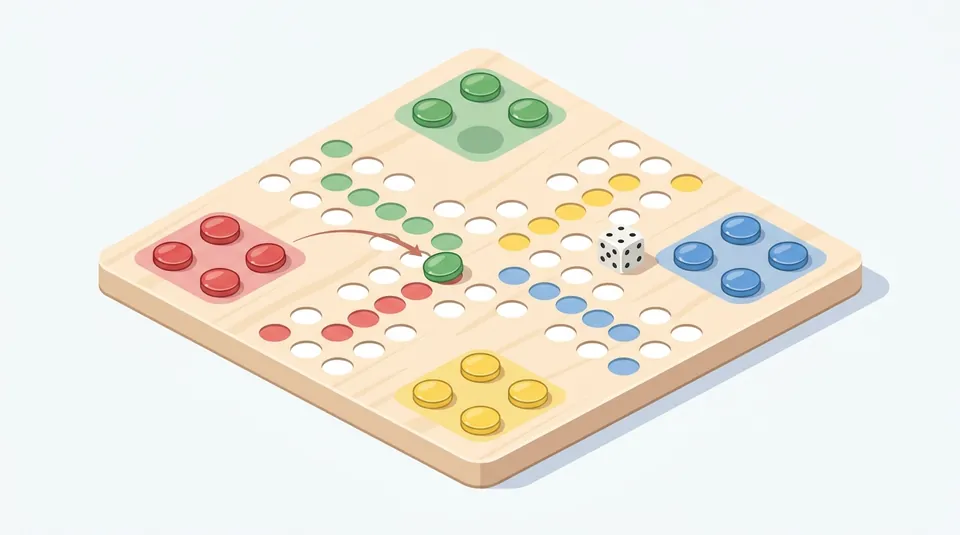
Push enemies back to their yard
Land by exact count on a square holding an enemy token and you push it - the famous knuff - all the way back to its yard. The pushed token can return on a one or a six, so a knuff stings without ending anyone's game.
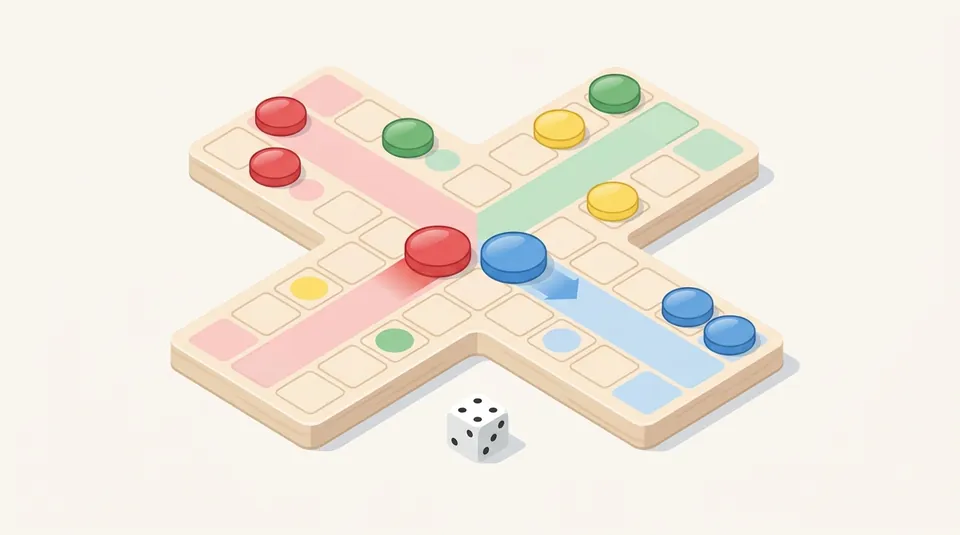
Stay moving, because nowhere is safe
Fia has no star squares and no protected start squares. Any token on the track can be pushed at any time, so survival comes from spacing, not parking. Keep your tokens more than six squares ahead of anything that can reach them.
Finish with exact rolls
After a full lap each token turns into its own home column, where enemies can never follow. The last step onto the home triangle needs an exact roll, so oversized numbers must go to another token. Bring all four tokens home and you win.
History of Fia
Like every game in the Ludo family, Fia traces back to Pachisi, the cross-and-circle race game played in India for centuries. Pachisi's core idea - four players chasing pieces around a cross and knocking each other's pieces home - travelled west with traders and soldiers, and by the late 1800s Europe was full of simplified versions played with a single die.
Sweden shaped its own branch of the family. The game became known as Fia, or in full Fia med knuff, meaning 'Fia with a push' - knuff is the Swedish word for a push or shove, and the name Fia is usually explained as a short form of the girl's name Sofia. The Swedish rules leaned into the shoving: easy entries, no safe squares, and constant knock-backs kept every game noisy and close.
Through the 20th century Fia became a staple of Swedish family game shelves, sitting beside cards and dominoes in kitchens and summer cottages across the country, with close relatives played throughout Scandinavia, including the Norwegian form of Ludo. Digital versions carry the tradition on, and this one keeps the classic Swedish rule set intact: one or six to enter, no shelter on the track, and one satisfying knuff at a time.
How to Win Fia: Strategy
💡 Top tip: Get tokens out early and keep them out. One or six is a one-in-three chance every roll, so entries come cheap - a full spread of tokens turns almost any number into a useful move.
Winning tips, in order of importance
- Measure every gap. With no safe squares, the only protection is distance: a token seven or more squares ahead of the nearest enemy cannot be pushed this turn.
- Push freely when the landing square is decent. Captures cost less to attempt in Fia because there is no safe perch you are giving up to make them.
- Prefer pushing veterans. Knocking back a token that has travelled 40 squares erases 40 squares of work; pushing a fresh one barely matters.
- Mind the no-stacking rule before you roll. If two of your tokens sit close together, some numbers become illegal for the one behind - keep a few squares between your pieces.
- Respect enemy entries. Opponents come out on one or six, so the squares just past every start corner see constant traffic - do not loiter there.
- Ride your sixes. There is no three-sixes penalty, so a run of sixes can safely ferry one token a long way or bring the whole family out of the yard.
Advanced tactics for Fia
- Price every square by threat count. Each enemy token within six squares behind you adds roughly a one-in-six chance of a push per enemy turn, and two threats behind the same token roughly double the danger.
- Being pushed costs distance, not time. With a one-in-three entry chance, a knuffed token is usually back on the track within a couple of turns - so judge losses by squares travelled, not by turns stuck in the yard.
- The no-stacking rule makes your own tokens obstacles. A trailing token can rob the leader of its best number, so space your pieces so that every roll from one to six stays legal for at least one of them.
- Entry squares cut both ways. A fresh token entering your start square pushes any enemy sitting there, which makes a spare token in the yard a loaded weapon late in the game.
- Sixes compound in Fia. Without the three-sixes cap, every six is pure profit, so lines of play that keep a token exactly six squares from a target or from home earn a small but real bonus.
- Trade position for pressure. Sitting one to six squares behind an enemy is the only way to threaten it, and threats change how the AI moves - sometimes herding a rival onto worse squares is worth more than the push itself.
- Endgames reward spacing twice over. Exact rolls are needed to finish and stacking is banned everywhere, so stagger your last tokens at different distances and let every number finish or advance something.
Common Fia mistakes to avoid
- Hunting for safe squares that do not exist. Players trained on Classic Ludo park tokens on stars and start squares that offer no protection in Fia. Fix: measure safety by distance and stay seven or more squares ahead of the nearest threat.
- Hoarding tokens in the yard. With entries on one or six, sitting on three yard tokens wastes the easiest openings in the Ludo family. Fix: bring out a new token whenever your start square is not under immediate threat.
- Bunching your own tokens. Because stacking is banned, tokens packed close together turn good rolls into illegal moves. Fix: keep a gap of a few squares between your pieces so every number stays playable.
- Refusing to push because the fight looks risky. Skipping a knuff to play it safe hands your rivals free laps. Fix: take pushes that erase real progress, especially against tokens deep into their lap.
Fia Variations
Classic Ludo
The rule set most of the world learned first: only a six opens the yard, eight safe squares offer shelter, and three sixes in a row end your turn.
Quick Ludo
The fastest table on the site. Any roll brings a token out and only two tokens need to finish, so games wrap up in minutes.
Mensch ärgere Dich nicht
Fia's closest cousin, from Germany. It shares the bare track with no safe squares, so both games serve the same constant danger.
Parcheesi
The American branch. Tokens enter on a five, and doubling up on a square builds a blockade - the opposite of Fia's strict no-stacking rule.
Uckers
The Royal Navy's rowdy version, where stacked tokens form mixy-blob blockades. Fia bans the stack; Uckers turns it into a weapon.
Fia FAQ
How do you play Fia?
Roll a one or a six to move a token from your yard onto the track, then race all four tokens clockwise around the 52-square board and up your home column. Landing on an enemy token pushes it back to its yard. The first player to bring all four tokens home with exact rolls wins.
What does Fia med knuff mean?
It is Swedish for 'Fia with a push'. Knuff means push or shove, which describes what happens when you land on an enemy token. The name Fia is usually said to come from the girl's name Sofia.
How do tokens leave the yard in Fia?
On a roll of one or six. That is double the entry chances of Classic Ludo, which only accepts a six, so Fia games get moving much faster.
Are there safe squares in Fia?
No. Fia has no star squares and no protected start squares - every token on the track can be pushed home at any time. Only the home column is out of reach, because opponents can never enter it.
Can my tokens stack on the same square?
No. Fia forbids stacking, so a move that would land one of your tokens on another of your own is illegal, and you must pick a different move.
What happens when I roll a six?
You move, then roll again. Unlike Classic Ludo there is no three-sixes penalty, so a lucky streak can run as long as the die allows.
Does a token need an exact roll to finish?
Yes. Each token must land precisely on the home triangle. If a roll is too large for one token, give the number to another token or pass the turn.
How is Fia different from Classic Ludo?
Four ways: tokens enter on a one or a six instead of only a six, there are no safe squares of any kind, your own tokens can never share a square, and there is no three-sixes penalty. The result is a faster, rougher race.
How many players can play Fia?
Two, three, or four. On Ludo.now you control the red tokens and the computer plays the rest - pick a 2, 3, or 4-player table before you start.
Is Fia more luck or skill?
The die is luck, but with no safe squares every move is a risk decision. Judging gaps, choosing when to push, and spacing your tokens matter even more here than in Classic Ludo.
How long does a Fia game take?
Less time than Classic Ludo, because tokens enter on two numbers instead of one. A 2-player game often finishes in about five minutes, while four players usually need 10 to 20.
Can I play Fia online for free?
Yes. Fia on Ludo.now runs free in your browser with no download and no signup. Your stats save locally, and a free account keeps them synced across devices.
Fia guides & strategy
Still have a question about Fia? Browse the full Ludo FAQ, look up a term like blockade or safe square in the Ludo glossary, or compare Fia with the other games in the rules for every Ludo variant.
Last updated .