Play Mensch ärgere Dich nicht
Germany's favourite board game - No safe stars, no mercy, don't get annoyed.How to Play Mensch ärgere Dich nicht
In a nutshell: Germany's favourite board game - No safe stars, no mercy, don't get annoyed. It plays with 2-4 (you vs AI), it's rated pure knockabout, and without safe squares, captures decide most games.
Mensch ärgere Dich nicht means 'Don't get annoyed, man', and Germany's favourite board game spends every turn testing that advice. This free browser version follows the official rules in all their cheerful cruelty while you play red against smart AI opponents. One die, no safe fields anywhere - not even the start fields - and a capture lurking on every corner. A six is compulsory: while tokens wait in your yard, it must bring one out, and a token sitting on your start field has to move along before anything else may. When your whole team is stuck in the yard, you get three throws to hunt for that six. Your own tokens never share a field, you must move whenever a legal move exists, and every six earns a fresh throw with no three-sixes penalty. Walk all four tokens home on exact throws to win - and keep smiling.
Mensch at a glance
| Goal | Standard race rules with no safe star squares - every token is always a target. |
|---|---|
| Players | 2-4 (you vs AI) |
| Tokens | 4 per player on the 52-square cross track |
| Difficulty | Pure knockabout |
| Winning odds | Without safe squares, captures decide most games |
| Family | World Variants |
Step by step
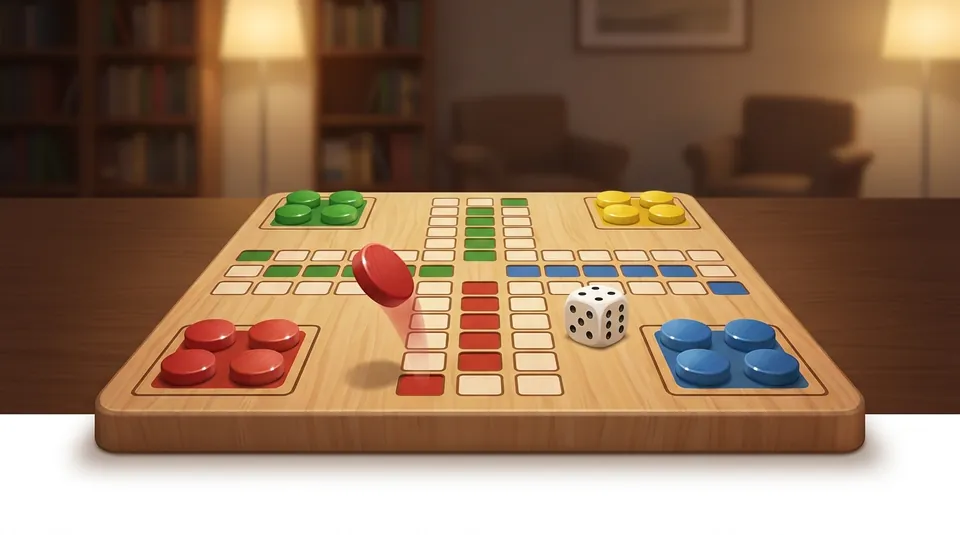
Find a six to leave the yard
Only a six brings a token from your yard onto your start field, and every six earns another throw. When everything you own sits in the yard or already at home, the rules grant you up to three throws per turn to hunt for that six, so a slow start never lasts long.
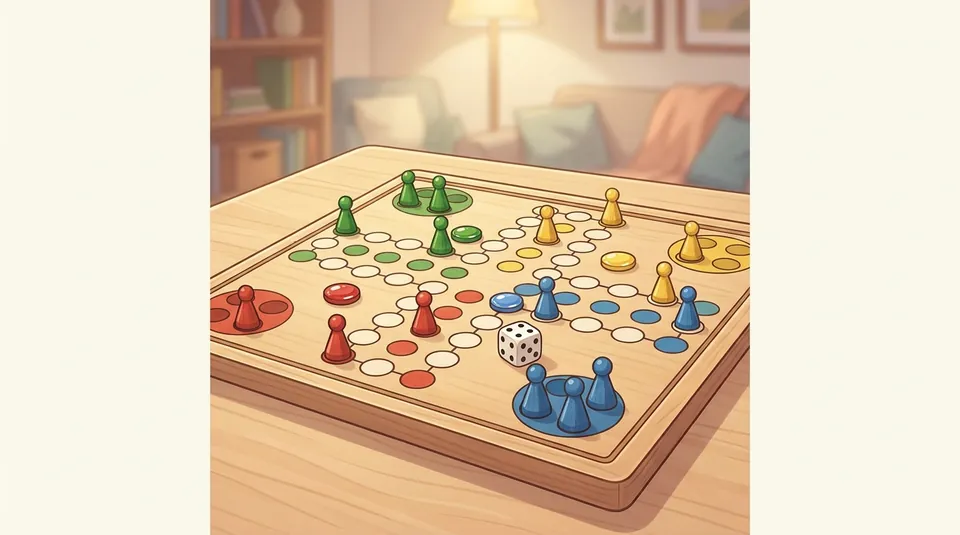
Obey the entry and start-field rules
Entering is compulsory: while tokens wait in your yard, a six must be spent bringing one out if the start field is playable. And a token standing on your start field - the A field on a German board - must move on before your other tokens may, so the doorway never stays blocked.
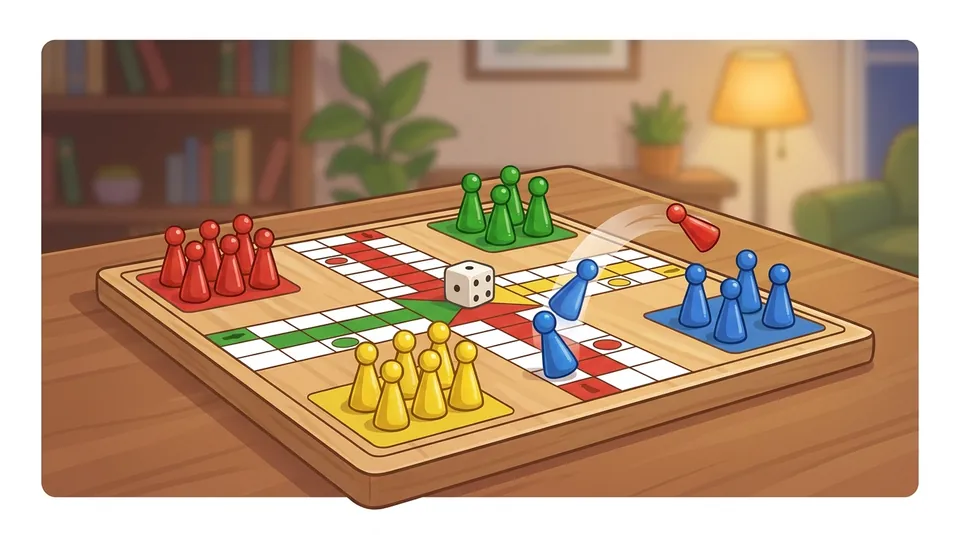
Capture anywhere on the track
There are no safe fields in this game - no stars, and not even the start fields protect anyone. Land by exact count on any enemy token and it flies back to its yard to begin all over again. Expect the same treatment in return, constantly.
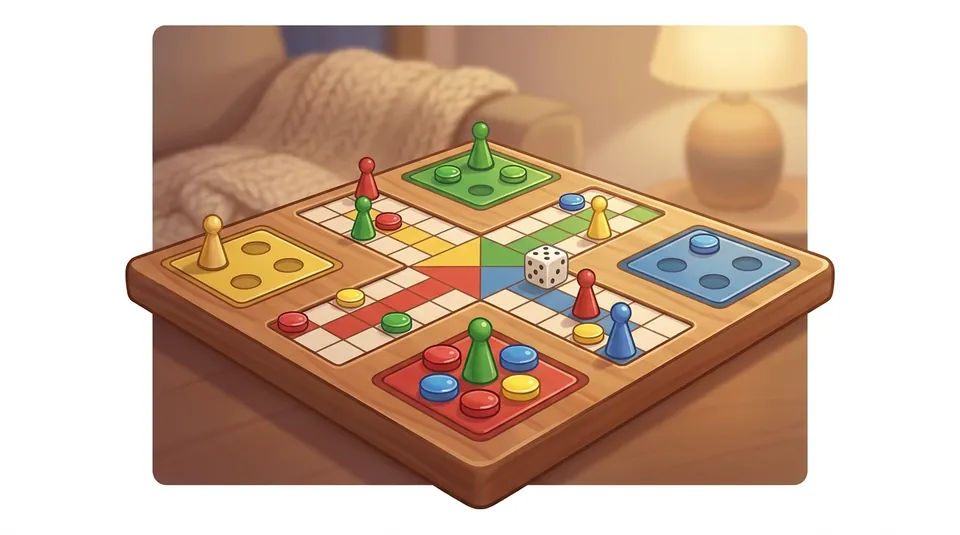
Move when the die says move
If any legal move exists you must make one, however painful. Your own tokens can never share a field either, so a throw that would land a token on one of your own cannot be used by that token. Careless crowding throws away moves.
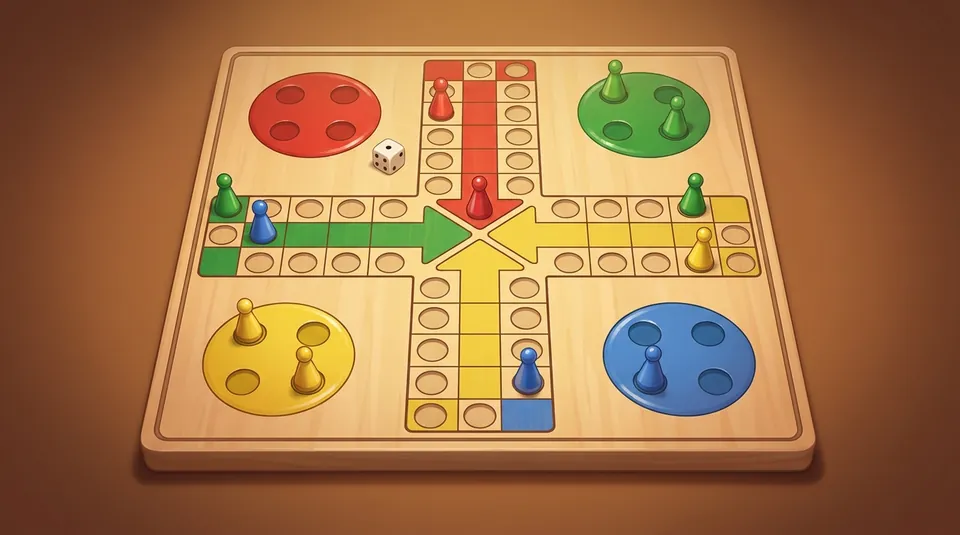
Shepherd all four tokens home
After a full lap each token turns into your private home column, out of reach at last. The final field takes an exact throw, so the endgame becomes a small numbers puzzle. First player to tuck all four tokens home wins.
History of Mensch
Josef Friedrich Schmidt devised Mensch ärgere Dich nicht in his Munich workshop around 1907 to 1908, reshaping the English game Ludo and its ancient Indian ancestor Pachisi into something leaner and crueller. He removed every hiding place, made moving compulsory, and put the warning right in the title. The game reached the market in 1914.
The First World War made it famous. Schmidt shipped thousands of copies to field hospitals, where wounded soldiers passed long recoveries throwing dice and sending each other's tokens home. When the men returned, the game went with them, and within a few years it sat on kitchen tables across Germany and carried Schmidt's firm to the front rank of games publishers.
More than 90 million copies later, Mensch ärgere Dich nicht is a German institution: the box in nearly every family's cupboard, the first board game most children learn, and the cause of a century of table-thumping followed by laughter. The lesson in the title has never changed - the game will annoy you, and that is the point.
How to Win Mensch: Strategy
💡 Top tip: Space is your only shield. Nothing on this board protects a token, so after every move count how many enemies sit within six fields behind each of yours.
Winning tips, in order of importance
- Respect the compulsory entry. While tokens wait in your yard, every six you throw is already spoken for, so never build a plan for your leader around a six the rules will spend elsewhere.
- Plan where your start-field token will land. The rules push it off the A field while others wait in the yard, so steer it toward quiet fields instead of letting the rule shove it into traffic.
- Keep three tokens on the track. The must-move rule turns a lone runner into a puppet of the die, while a spread of tokens lets you pick the harmless option.
- Leave seven or more fields between your own tokens. They can never share a field, so a token six or fewer ahead of another cancels that exact number every turn.
- Capture whenever the price is fair. A token sent home loses its whole lap and must re-enter through the yard - and there is no fortress it can rebuild behind.
- Turn into the home column at the first chance. On the track your leader is everyone's favourite target; one field inside the column it is untouchable.
Advanced tactics for Mensch
- See the track as a heat map. Each enemy threatens the six fields ahead of it at roughly one chance in six per number, so fields covered by two enemies are nearly twice as dangerous - steer for the cold fields.
- Exploit forced entries. Opponents must also spend their sixes on entering and must also clear their start fields, so you can often predict exactly where their next token will stand - and park a hunter one throw behind it.
- The fields just past every start are a shooting gallery. Compulsory entry keeps fresh tokens appearing there with an extra throw in hand, so never loiter within six fields of an enemy A field.
- Trade by lap value. Swapping your ten-field token for their forty-field token wins nearly a lap of tempo, even though the scoreboard shows one capture each.
- Budget your six-chains. Every six brings a free throw and no penalty ever ends the streak, but each throw is also a forced move - know which token will absorb an ugly number before you shake again.
- Design your endgame spacing. Bunched tokens near the home column steal each other's exact numbers, so feed them toward the finish in staggered waves that let different throws finish different tokens.
- Master the tilt. The game is built to needle you, and the AI never gets angry - chasing revenge pulls your tokens out of position, so take captures on value and let the title do its job.
Common Mensch mistakes to avoid
- Planning around a six that is not yours to spend. While tokens wait in the yard, the rules seize every six for entry. Fix: assume each new six enters a token, and plan your leaders around the numbers one to five.
- Loitering in front of an enemy start field. Compulsory entry keeps dropping fresh tokens there with an extra throw ready. Fix: clear the six fields past every enemy A field as quickly as you can.
- Parking your own tokens close together. With one token per field, a trailing token loses any number that lands on one of your own. Fix: keep at least seven fields between your tokens whenever possible.
- Playing angry after a capture. The game is engineered to sting, and revenge moves are usually bad moves. Fix: judge every capture by position, not payback, and remember what the box told you.
Mensch Variations
Classic Ludo
The homepage game, with star fields where a token can catch its breath. After the bare-knuckle track of Mensch it feels like a holiday.
Uckers
The Royal Navy's version, played here the traditional way with two dice, barriers, and 2 vs 2 partners. Aggression through walls instead of raw exposure.
Fia
Sweden's cousin, short for Fia med knuff - 'Fia with a push'. It shares this game's joy in shoving rivals back to square one.
Quick Ludo
Any throw brings a token out and only two need to finish. The same nervous energy squeezed into a coffee-break game.
Parcheesi
The American line of the family, where tokens enter on a five and pairs form blockades. It swaps constant danger for positional squeezes.
Mensch FAQ
What does Mensch ärgere Dich nicht mean?
It is German for 'Don't get annoyed, man'. The title is a friendly warning from the designer: tokens fly home constantly in this game, and staying calm about it is half the sport.
How do you play Mensch ärgere Dich nicht?
Throw one die, bring tokens out of the yard on sixes, race them clockwise around the cross, and knock enemies home by landing on them. Guide all four of your tokens up the home column on exact throws before anyone else does.
Are there any safe fields?
None at all. There are no star fields, and even the start fields offer no protection - a token standing on one can be captured like any other. Only the home column is out of reach.
Do I have to enter when I roll a six?
Yes. While you still have tokens in the yard, a six must be used to bring one onto your start field, provided that field is playable. Only when the yard is empty is a six yours to spend freely.
What is the start field rule?
Your start field - the A field on a German board - must be cleared as soon as possible. While tokens wait in your yard, a token sitting on that field has to move on before any of your other tokens may move.
What is the three tries rule?
When you have nothing on the track - everything in the yard or already home - you may throw up to three times to find a six. If none of the three throws shows a six, your turn passes.
Can two of my tokens share a field?
Never. One token per field is the law. A throw that would land a token on another of your own cannot be used by that token, and you must look for a different legal move.
Do I have to move if every option is bad?
Yes. If any legal move exists you must take one, even when it walks a token straight into danger. There is no passing to stay safe, which is exactly how the game earned its name.
What happens when I roll a six?
You move, then throw again, and the chain has no limit - there is no three-sixes penalty here. Remember that while tokens remain in the yard, the six must first be spent bringing one out.
Do I need an exact throw to finish?
Yes. Each token must land precisely on its home field. A throw that overshoots cannot be used by that token, so spacing your tokens near the end keeps every number useful.
Who invented Mensch ärgere Dich nicht?
Josef Friedrich Schmidt, who worked it out in Munich around 1907 to 1908 from Ludo and the ancient Indian game Pachisi. It reached shops in 1914 and has passed 90 million copies sold.
Can I play Mensch ärgere Dich nicht free?
Yes. The game runs free in your browser on Ludo.now with no download and no signup, and you play red against smart AI in games of two to four players. Stats save locally, a free account syncs them, and the daily challenge ranks everyone on the same dice.
Mensch guides & strategy
Still have a question about Mensch ärgere Dich nicht? Browse the full Ludo FAQ, look up a term like blockade or safe square in the Ludo glossary, or compare Mensch with the other games in the rules for every Ludo variant.
Last updated .