Play Quick Ludo
Ludo at double speed - Any roll leaves the yard, and two tokens home wins.How to Play Quick Ludo
In a nutshell: Ludo at double speed - Any roll leaves the yard, and two tokens home wins. It plays with 2 or 4 (you vs AI), it's rated fast & forgiving, and games finish in 5-10 minutes.
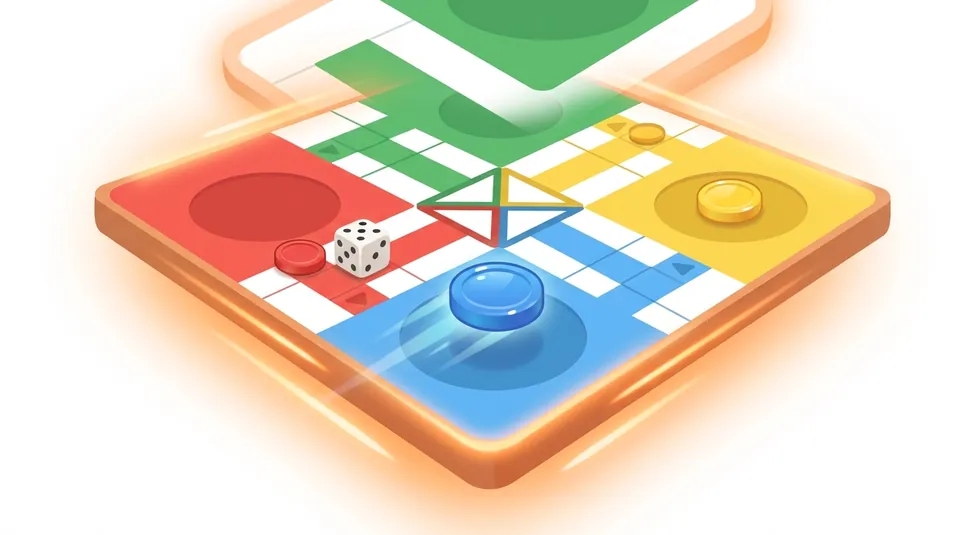
Quick Ludo is Classic Ludo with the waiting removed. The board is the familiar 52-square cross, but any roll - not just a six - brings a token out of your yard, and every player begins with one token already standing on their start square. Best of all, the race is shorter: the first player to bring just two tokens home wins. Captures still sting, sending tokens all the way back to the yard, a six still earns an extra roll, and three sixes in a row still ends your turn. Star squares and start squares remain safe ground. Because the finish line is so close, every capture and every escape can decide the whole game. Play the 2-player or 4-player mode as red against smart computer opponents. A full game takes 5 to 10 minutes, runs free in your browser, and needs no download and no signup.
Quick at a glance
| Goal | Be the first to bring two tokens home - any roll can leave the yard. |
|---|---|
| Players | 2 or 4 (you vs AI) |
| Tokens | 4 per player on the 52-square cross track |
| Difficulty | Fast & forgiving |
| Winning odds | Games finish in 5-10 minutes |
| Play modes | 2 Players, 4 Players |
| Family | Fast & Casual |
Step by step
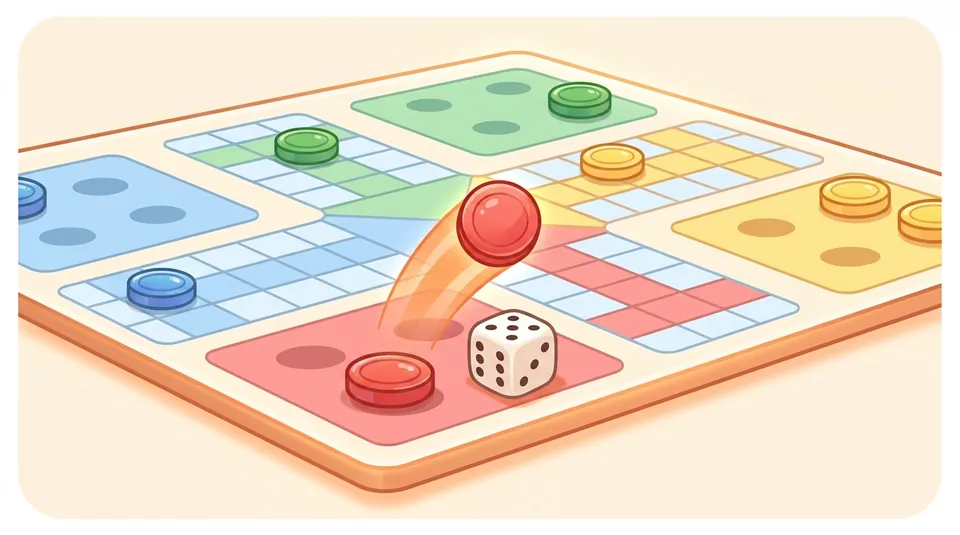
Start with a token on the track
Every player begins the game with one token already on their start square, so you have a runner from the very first roll. The start square is safe ground, but the moment you step off it, the race - and the risk - begins.
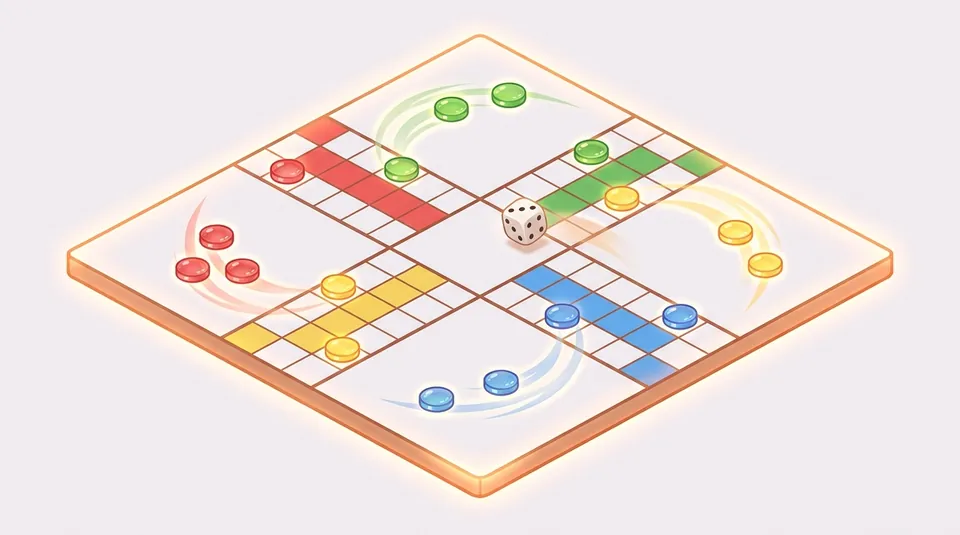
Leave the yard on any roll
You never wait for a six in Quick Ludo. Any number can move a token from your yard onto your start square, so fresh runners are always one roll away. A six still earns you an extra roll, and three sixes in a row still ends your turn.
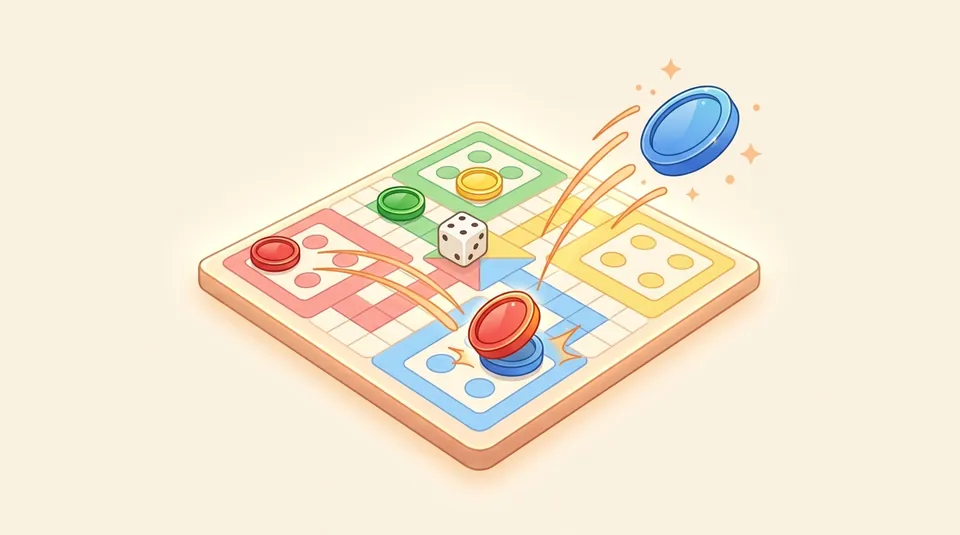
Race clockwise and capture
Each roll moves one token that many squares clockwise around the cross. Land exactly on a square holding a single enemy token and it goes straight back to its yard. Tokens on star squares or their own start square cannot be touched.
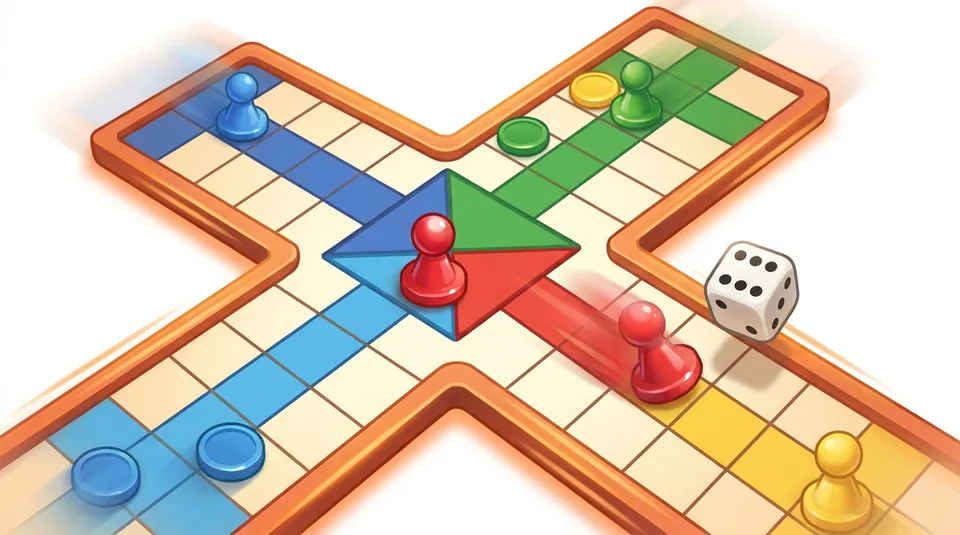
Pick which token takes the roll
When several of your tokens can move, you decide which one uses the roll. In a race this short, that choice matters even more than in Classic Ludo - one smart dodge or one well-timed capture can swing the whole game.
Bring two tokens home to win
After a full lap, each token climbs its own home column, where opponents can never follow. The final step onto the home triangle needs an exact roll. The first player to walk two tokens all the way home takes the game.
History of Quick
Almost as soon as Ludo was patented in 1896, players began trimming its rules at the kitchen table. Waiting turn after turn for a six frustrated children and adults alike, so families invented house rules: enter on a one as well as a six, enter on any roll, or declare a winner after two or three tokens instead of four. These shortcuts spread by word of mouth and travelled with the game around the world.
Publishers noticed. Twentieth-century rulebooks and travel editions often printed a 'short game' option beside the standard rules, and some regional cousins made entering the track easier from the start. The idea that Ludo should fit the time you have, rather than the other way round, turned out to be nearly as old as Ludo itself.
The smartphone era finished the job. When Ludo apps drew hundreds of millions of players in the 2010s, designers needed matches that fit a bus ride, so fast modes with instant entry and shorter win conditions became standard. Quick Ludo brings that coffee-break format to your browser: the classic board, the classic captures, and a race that is settled in minutes.
How to Win Quick: Strategy
💡 Top tip: Pick your two runners early and guard them with everything. You only need two tokens home, so every step of progress on your leading pair is worth double what it would be in Classic Ludo.
Winning tips, in order of importance
- Treat captures as match points. Sending back an enemy runner that is halfway home costs them a huge share of a very short race - often more than any move of your own could gain.
- Count the gap behind your runners after every move. A token one to six squares ahead of an enemy can be captured next turn, and in Quick Ludo one knock-back usually ends that runner's chances.
- Use the yard as a bench. Any roll can relaunch a captured token, so after a knock-back, judge whether to rebuild that runner or promote a different token that is already further along.
- Hop between safe squares when enemies close in. Star squares and start squares cost nothing to use, and a turn spent parked beats a lap spent recovering.
- Mind the squares just past every start square. Enemies can enter on any roll in this variant, so the entry lanes refill far more often than in Classic Ludo - do not loiter there.
- Stagger your two runners near the end. The last step needs an exact roll, so keep them at different distances from home and more of your rolls will be useful each turn.
Advanced tactics for Quick
- Entry pressure never stops in Quick Ludo. In Classic, a start square refills only after a six, about one roll in six; here it can refill every single turn, so the six squares past each enemy start are the most dangerous real estate on the board.
- Measure every trade against the two-home finish line. Losing a token that has travelled 40 squares hurts in Classic; in Quick Ludo it can be the entire game, because there is no long middle phase to recover in.
- Your third and fourth tokens are tools, not racers. Bring them out to threaten captures, cover your runners' backs, and soak up awkward rolls - they win the game by never needing to finish.
- Do not rush your free starting token off its square. It sits on safe ground, and moving it without a plan hands opponents an early target - sometimes the stronger opening is to launch a second token and advance the pair together.
- Sixes shift from keys to fuel. In Classic a six unlocks the yard; here it is pure tempo, an extra roll to spend on your leading pair. Plans that need a six are still bad plans, but sixes you do get should almost always feed your runners.
- In 4-player mode, chaos favours the patient. With every colour able to enter on any roll, the early track is crowded and captures are constant - let opponents trade blows, keep your pair on safe squares, and strike when the lanes clear.
- Play the AI's priorities. The computer hunts your most advanced token, and in Quick Ludo that is your near-winner - screen it with your second runner and reserves, and step it onto safe ground whenever the gap behind it is six or less.
Common Quick mistakes to avoid
- Playing Quick Ludo like Classic and developing all four tokens evenly. Only two need to finish, so spread effort is wasted effort. Fix: commit to two runners and use the other tokens as escorts and threats.
- Marching your free starting token forward on turn one just because it is there. It leaves safe ground and becomes the board's first target. Fix: keep it parked until you can move it with support or purpose.
- Forgetting that opponents can enter on any roll. The lanes past enemy start squares refill constantly, and loitering there gets runners captured. Fix: pass through those six squares quickly, or wait on a safe square until you can.
- Bringing both runners to the mouth of the home column together. Exact rolls are needed to finish, and twins at the same distance waste half your rolls. Fix: keep your runners at different distances so more numbers are useful.
Quick Variations
Classic Ludo
The full-length original: a six to leave the yard and all four tokens home to win. Play it when you want the marathon instead of the sprint.
Team Ludo
Two fixed partnerships race to bring all eight team tokens home. Slower than Quick, but playing alongside a partner adds a whole new layer.
Fia
Sweden's beloved family version, built around cheerful knock-backs and simple rules. Its brisk, friendly feel is a natural next step from Quick Ludo.
Mensch ärgere Dich nicht
The German classic with no star squares, so there is nowhere to hide on the track. Captures come thick and fast - perfect if you like Quick Ludo's constant danger.
Uckers
The Royal Navy's rowdy take, where blockades can jam the whole track. More tactical stalling and less pure speed, but the same appetite for aggression.
Quick FAQ
How do you play Quick Ludo?
Move tokens clockwise around the same cross-shaped track as Classic Ludo. Any roll can bring a token out of your yard, you start with one token already on your start square, and the first player to bring two tokens home wins. Captures, safe squares, and exact finishing rolls all work as usual.
Do I need a six to leave the yard?
No. That is the biggest change from Classic Ludo - any roll of one through six can move a token from your yard onto your start square. A six still gives you an extra roll.
How many tokens do I need to get home?
Just two. Your other two tokens can help by capturing and covering, but only two need to complete the lap and climb the home column for you to win.
Why do I start with a token on the board?
Every player begins with one token on their start square so the race starts immediately. The start square is safe, so nothing can capture that token until you choose to move it forward.
Does a six still give an extra roll?
Yes. Roll a six, move, and roll again - exactly like Classic Ludo. The old punishment still applies too: three sixes in a row ends your turn immediately.
How does capturing work?
Land exactly on a square holding a single enemy token and it returns to its yard. Because any roll can re-enter a token, the sting is smaller than in Classic - but in a race to two, losing a lap of progress is usually decisive.
What are the safe squares in Quick Ludo?
The same eight as Classic Ludo: each colour's start square and the four star squares. Tokens standing there cannot be captured, and home columns stay private to their owner.
Is an exact roll needed to finish?
Yes. Each token must land exactly on the home triangle. If your roll overshoots, you must use it on another token or forfeit the move.
How long does a Quick Ludo game take?
Five to ten minutes, whether you play the 2-player or 4-player mode. That is roughly half the length of a Classic game, which makes Quick Ludo ideal for a short break.
Is Quick Ludo good for beginners?
Yes - it is the friendliest way to learn. There is no waiting on a six to start, games end quickly, and the capturing and safe-square rules are identical to Classic, so everything you learn here carries over.
Can I play Quick Ludo free?
Yes. Like every game on Ludo.now, Quick Ludo runs free in your browser with no download, no install, and no signup. Stats save in your browser, and a free account syncs them across devices.
Can I play against real people?
Yes. Beyond the smart AI, you can join online multiplayer races or take on the daily challenge, where everyone rolls the same dice sequence and the leaderboard ranks pure decision-making.
Quick guides & strategy
Still have a question about Quick Ludo? Browse the full Ludo FAQ, look up a term like blockade or safe square in the Ludo glossary, or compare Quick with the other games in the rules for every Ludo variant.
Last updated .