Play Uckers Board Game
The Royal Navy's Ludo - Two dice, barriers, and the famous mixy-blob.How to Play Uckers
In a nutshell: The Royal Navy's Ludo - Two dice, barriers, and the famous mixy-blob. It plays with 2 (1v1) or 4 (2v2 partners) vs AI, it's rated naval-grade aggression, and two dice and barriers make comebacks common.
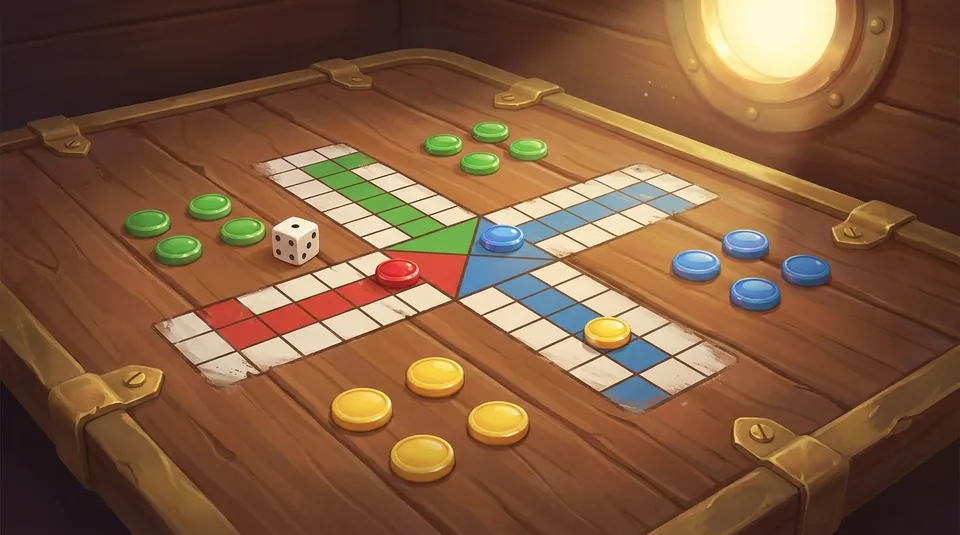
Uckers is the Royal Navy's fighting version of Ludo, and this free browser edition plays it the proper messdeck way: with two dice. Every throw gives you two numbers to spend - split them between two pieces, stack both on one piece, and forfeit whatever you cannot use. A six brings a piece out of the base onto your doorstep, and any throw holding a six earns another throw. A double six can launch two pieces at once, and snake eyes on the game's very first throw puts every piece on the board - all bits out. Two of your own pieces on one square form a barrier no enemy can land on or pass. Play 1 vs 1, or the traditional 2 vs 2 with your yellow AI partner against green and blue. Land on a lone enemy piece and you uck it off back to its base. First side to get every piece home wins.
Uckers at a glance
| Goal | Two-dice race to the doorstep and home - solo or as 2v2 partners, Navy style. |
|---|---|
| Players | 2 (1v1) or 4 (2v2 partners) vs AI |
| Tokens | 4 per player on the 52-square cross track |
| Difficulty | Naval-grade aggression |
| Winning odds | Two dice and barriers make comebacks common |
| Play modes | 1 vs 1, 2 vs 2 |
| Family | World Variants |
Step by step
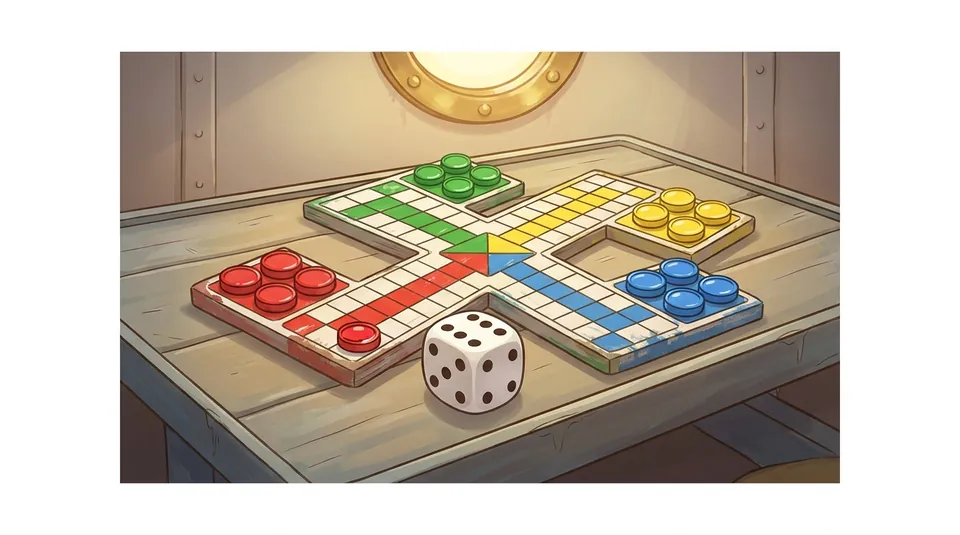
Throw two dice and spend both
Every turn you throw two dice, just like on a real messdeck. Use one die on each of two pieces, or put both numbers onto a single piece for one long move. A die that no piece can legally use is forfeited, so keep your pieces spread out where every number has work to do.
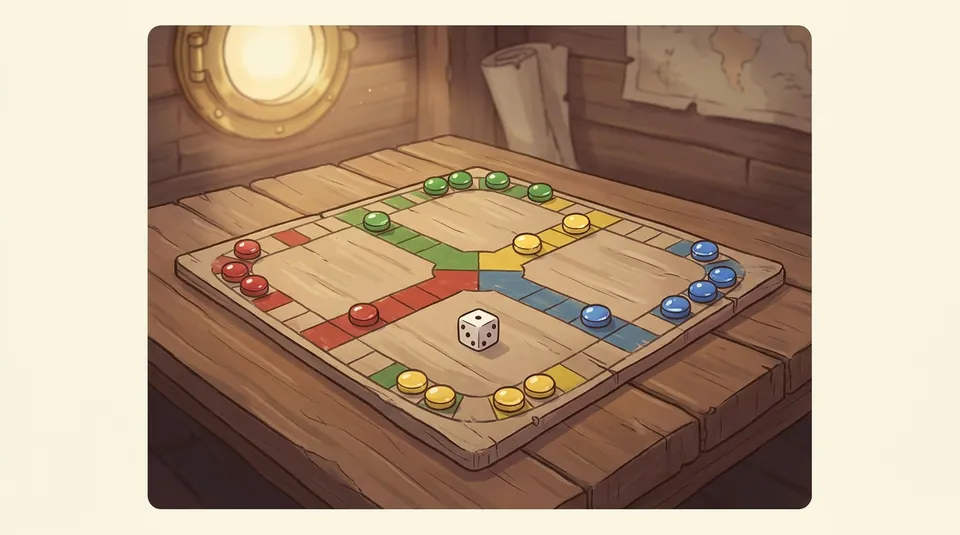
Roll a six to reach your doorstep
A six lifts a piece out of the base onto your doorstep, the start square outside your base, and any throw holding a six earns another throw. A double six can bring two pieces out together. If the game's very first throw is snake eyes - a 1 and a 1 - every piece of every player comes out at once: all bits out.
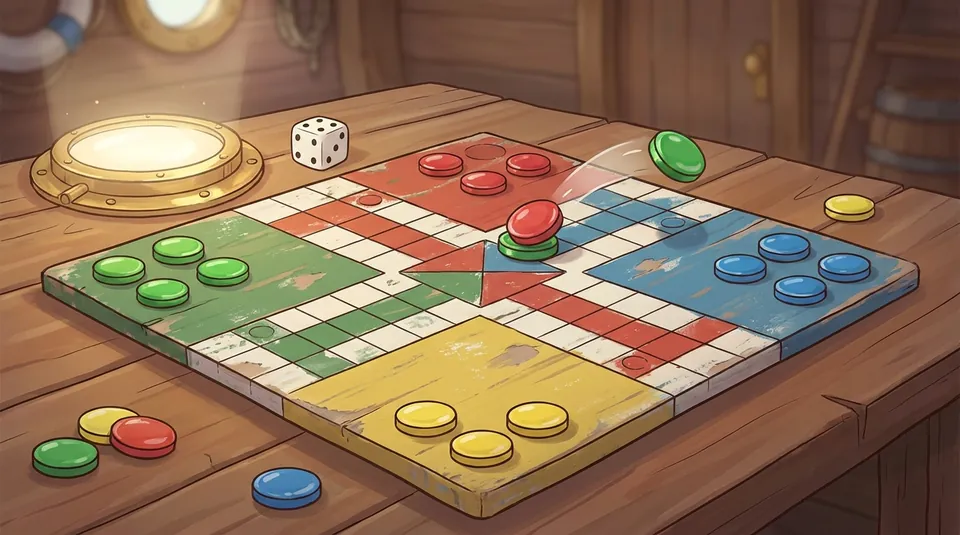
Build barriers to own the track
Put two or more of your pieces on one square and you have a barrier. Enemy pieces cannot land on it and cannot pass it, so they queue up behind your wall while the rest of your side runs. A barrier never blocks your own pieces, and in the partners game it never blocks your partner either.
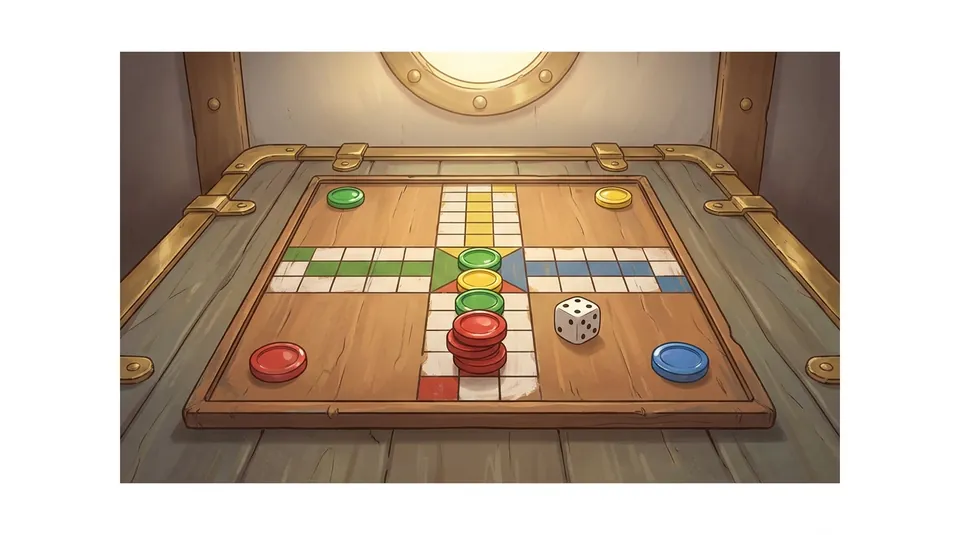
Uck lone enemies back to base
Land by exact count on a square holding a single enemy piece and you uck it off - straight back to its base to wait for another six. Only the doorsteps are safe ground; there are no star squares in Uckers, so every lone piece on the open track is a target.
Bring your side home
After a full lap each piece climbs your private home column, and the last step needs an exact count. In 1 vs 1 the first player with all four pieces home wins. In the 2 vs 2 partners game victory goes to the first team to bring all eight of its pieces home.
History of Uckers
Uckers took shape in the Royal Navy in the early years of the twentieth century, growing out of Ludo and its ancient ancestor Pachisi as sailors carried race games to sea. No inventor signed it and no date marks its launch - the rules travelled from ship to ship and mess to mess, gathering slang and sharpening its teeth along the way.
By the middle of the century Uckers ruled the messdeck. Crews played on big doubled Ludo boards, often painted by the ship's own hands, and inter-mess and inter-ship championships were contested with deadly seriousness. The game's language became part of navy life: the doorstep, ucking a piece off, and the dreaded eight-piecer that hangs over every match.
The game spread well beyond the Royal Navy, to the RAF and to Commonwealth navies from Australia to Canada, each service adding house rules of its own. Our version now plays it the traditional way - two dice on every throw, barriers on the track, and the classic 2 vs 2 partnership game - so you can join a messdeck match from any browser.
How to Win Uckers: Strategy
💡 Top tip: Split your dice with intent. Two numbers mean two decisions every turn, and the player who feeds two runners forward usually beats the one who dumps both dice on a single piece.
Winning tips, in order of importance
- Plant a barrier just past an enemy doorstep. Their fresh pieces step out, hit your wall within a square or two, and stack up with nowhere to go.
- Count danger in two ranges. A single die reaches you from one to six squares back, but both dice together reach from two to twelve, so a piece that looks clear can still be ucked off.
- Spend the extra throw from a six on launching another piece, not on driving your leader deeper into enemy waters alone.
- Pieces trapped behind your barrier cannot run away. March a trailing piece up behind the queue and uck them off one by one.
- In the partners game, play for eight pieces, not four. A move that frees your partner's runner or shields their lane can be worth more than a small gain of your own.
- Stagger your pieces near the home column. The final step needs an exact count, and two dice give you more ways to finish - but only if different pieces are waiting on different numbers.
Advanced tactics for Uckers
- Learn the two-dice curve. Totals near seven come up far more often than two or twelve, so a capture that relies on a seven-square gap will fire constantly, while a twelve-gap plan almost never lands.
- Treat a barrier as rent, not a home. Every turn the enemy queue sits behind your wall, your free pieces bank distance - but the two pieces in the wall bank nothing, so break it the moment the trade stops paying.
- Forfeits are information. If holding a barrier forces you to throw away dice turn after turn, the wall is taxing you as hard as the enemy - loosen your position so both numbers always have a legal move.
- The snake-eyes opening rewrites the early game. When all bits come out on the first throw, there is no slow build-up - captures start immediately, so shift straight to counting threat ranges and claiming a strong barrier square.
- In 2 vs 2, your barrier is half a fortress. It never blocks your partner, so a wall in front of an enemy doorstep shuts one opponent down while your partner's pieces stream past it untouched.
- Chain your sixes without fear. Any throw holding a six earns another throw and there is no three-sixes rule, so a hot streak is pure profit - just decide before each re-throw which piece can absorb an awkward number.
- Hunt with the second die. Step a piece into range with one number, then land the killing blow with the other - two dice in one turn line up captures that a one-die game could never reach.
Common Uckers mistakes to avoid
- Dumping both dice on one runner while the rest of your side sits in the base. One uck erases the whole voyage. Fix: use sixes and split dice to get two or three pieces working early.
- Hunting for star squares that do not exist. Uckers gives you no safe ground beyond the doorsteps. Fix: measure safety by distance and barriers, and recount enemy ranges after every throw.
- Holding a barrier long after it stops earning. Two pieces frozen in a wall cannot score. Fix: break the barrier once the trapped queue clears or your runners are past danger, then race the wall pieces home.
- Playing the partners game as if you were alone. Ignoring the yellow AI wastes half of your team's eight pieces. Fix: pick moves that open your partner's lane, cover their runners, and trap your shared enemies.
Uckers Variations
Classic Ludo
The familiar one-die game, playable right on the homepage. Safe star squares and a gentler pace make it feel like shore leave after Uckers.
Team Ludo
Classic rules in two fixed partnerships. If you enjoy the 2 vs 2 side of Uckers but want your star squares back, this is the bridge.
Parcheesi
The American branch of the family. Two pieces on a square form a blockade nothing can pass, and entry comes on a five instead of a six.
Pachisi
The ancient Indian original that started it all. Castle squares shelter pieces, and the tempo rewards the same patient siege craft as a good barrier.
Mensch ärgere Dich nicht
Germany's ruthless one-die classic. No barriers, no partners, and no safe squares at all - every token is one throw from a trip home.
Uckers FAQ
What is Uckers?
Uckers is the Royal Navy's own take on Ludo, played on messdecks for over a century. You throw two dice, race pieces around a cross-shaped board, uck lone enemies back to base, and block the track with barriers. On Ludo.now you play it free in your browser against smart AI.
How do the two dice work?
Every throw gives you two dice. You can move two different pieces, one die each, or move a single piece twice using both numbers. Any die that no piece can legally use is forfeited, so flexible positions waste fewer throws.
How do I get a piece out of the base?
Throw a six. It places a piece on your doorstep, the start square outside your base, and any throw holding a six earns another throw. A double six can bring two pieces out in one go.
What is snake eyes at the start?
If the very first throw of the whole game is a 1 and a 1, every piece belonging to every player comes out onto its doorstep at once. Sailors call it all bits out, and it turns the opening straight into a brawl.
What is a barrier?
Two or more of your own pieces on the same square. Enemy pieces cannot land on a barrier and cannot pass it, so they pile up behind it. It never blocks your own pieces, and in the partners game it never blocks your partner.
How does the 2 vs 2 partners game work?
You and the yellow AI play as a team against green and blue, just like traditional four-handed Uckers. Partners never capture each other, and a partner's barrier never blocks you. The first team to bring all eight of its pieces home wins.
What does it mean to uck a piece off?
To capture it. Land by exact count on a square holding a single enemy piece and it is ucked off - sent back to its base, where it waits for another six before it can rejoin the race.
Are there safe squares in Uckers?
Only the doorsteps, the coloured start squares. There are no safe star squares at all, so a lone piece anywhere else on the track can always be ucked off. The home columns stay private, as in every Ludo variant.
Do I need an exact count to finish?
Yes. Each piece must land exactly on its final home square. With two dice you can often split or combine numbers to make the count, and any die you truly cannot use is forfeited.
Is there a three-sixes penalty?
No. In Uckers the six's reward is the extra throw: any throw holding a six lets you throw again, and the chain runs as long as your luck does.
What is an eight-piecer?
Navy slang for the ultimate shut-out: winning before the other side has brought a single piece home. On a real messdeck the losers of an eight-piecer never hear the end of it.
Can I play Uckers free?
Yes. Everything on Ludo.now runs free in your browser with no download and no signup. Your stats save locally and a free account syncs them across devices. Try the daily challenge, where everyone gets the same dice and the leaderboard measures pure skill.
Uckers guides & strategy
Still have a question about Uckers? Browse the full Ludo FAQ, look up a term like blockade or safe square in the Ludo glossary, or compare Uckers with the other games in the rules for every Ludo variant.
Last updated .