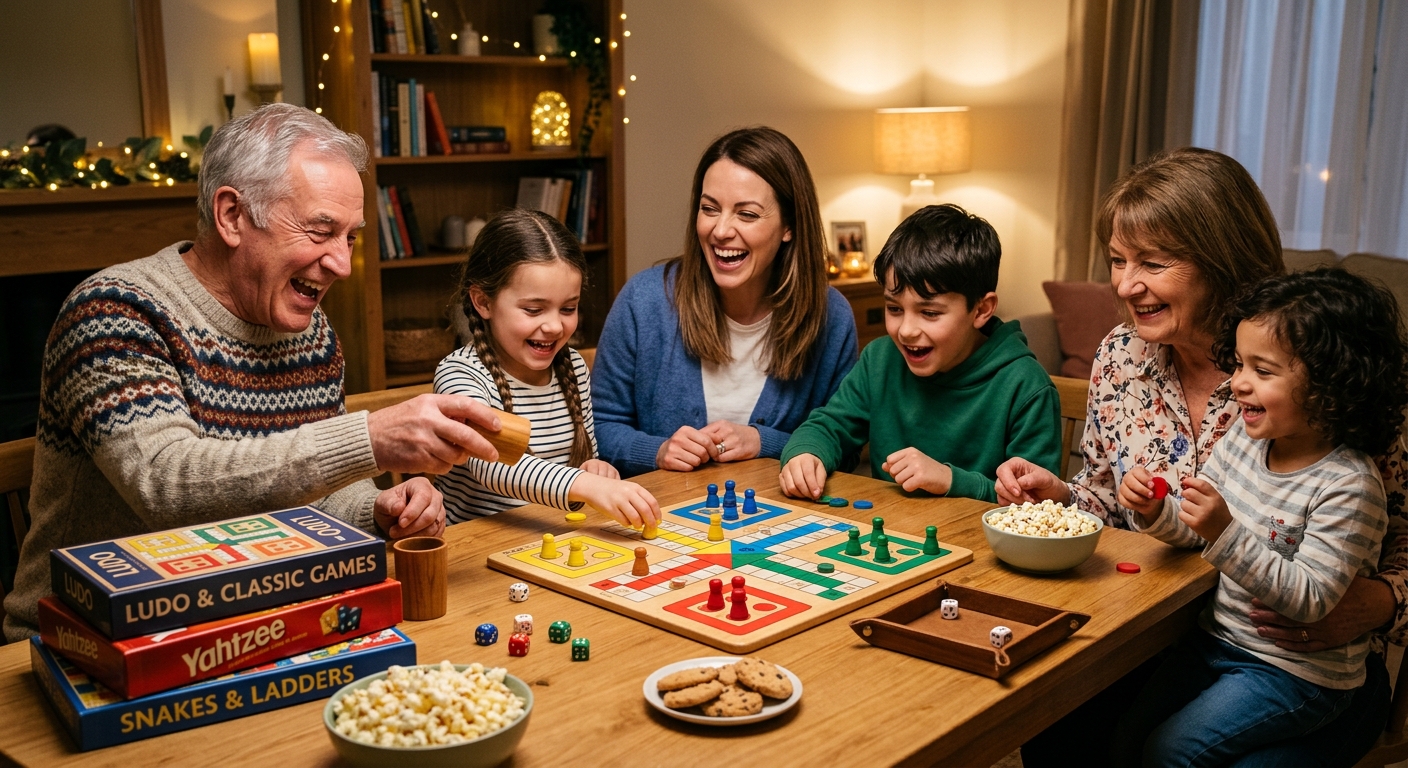
The board hits the table, someone rattles the dice, and within sixty seconds everyone is leaning forward. That is what Ludo does. It cuts through age gaps, phone distractions, and tired moods in a way that very few games can match. The trouble most families run into is not the game itself. It is the dead air before the first piece moves, the restless younger players, and the way energy dips between rounds. This guide gives you a full evening framework: how to set up Ludo properly, how to make smart decisions during play, and how to use shorter dice games to keep everyone warmed up and engaged from start to finish.
Your Game Night Blueprint
- Ludo works best as the main event, not the only event. Pair it with shorter dice games to keep every player engaged from arrival to last round.
- Setup clarity prevents arguments. Agree on the knock-out rule and safe-zone rules before the first token leaves home.
- Turn order strategy matters more than luck. Knowing when to attack versus when to advance your own tokens is the skill that separates repeat winners.
- Dice warm-up games like Left Center Right need no board and almost no learning time, making them perfect between Ludo rounds.
- Mixing game lengths keeps attention spans happy across different ages, especially when younger players are at the table.
Why Ludo Works as the Centerpiece
Ludo has been pulling families together for well over a century. Its design descends from the ancient Indian game of Pachisi, which itself dates back possibly thousands of years. The British adapted it into the version most people recognize today, and it spread across the world through trade routes and colonial exchange. A closer look at Ludo's origins and global journey reveals just how deeply embedded this game is across different cultures and continents.
What makes it such a strong anchor for a game night is the combination of accessibility and genuine tension. Anyone can understand the objective within a minute. But the choices that emerge during play, whether to block a rival, rush your own token home, or take a calculated risk crossing an unprotected stretch of board, create real drama. That drama builds over multiple rounds, which is why Ludo functions as the centerpiece rather than just one game among many.
Getting the Board Ready Before Anyone Rolls
Token Placement and the Rules Everyone Should Agree on First
Each player picks a color and places all four tokens in the matching home area. Tokens only enter the main track by rolling a six. Once out, they move clockwise around the board according to each dice roll. The player to the left of whoever sets up the board typically goes first, then play moves clockwise from there.
Two rules cause confusion at almost every family table. First, the knock-out rule. If your token lands on a square already occupied by a rival's token, that rival gets sent back to their home area to start again. Some families play without this rule, which makes the game friendlier but far less exciting. Second, safe squares. On standard boards, certain squares protect tokens from being sent back. Know which squares those are before the first roll, and make sure everyone at the table agrees. Sorting this out early prevents loud arguments mid-game.
Reading the Board and Making Smart Moves
New players often focus entirely on moving their fastest token forward. Experienced players spread their attention across all four. The goal is not just to advance one piece but to create situations where you have multiple tokens in play at different positions around the board.
These are the core tactical principles that shift outcomes in Ludo:
- Get multiple tokens out early. Keeping tokens in home means fewer options each turn. Every six you roll is a chance to expand your presence on the board, not just push one piece further ahead.
- Protect exposed tokens near rivals. A token sitting just ahead of a rival's piece is asking to be knocked back. Move it forward or accept the risk consciously.
- Use safe squares as staging posts. Parking a token on a protected square buys time to bring a second token up behind it, creating a traveling pair.
- Target the leader, not the last-place player. Sending back the player in last place costs you energy and accomplishes very little. Focus knock-outs on whoever is closest to winning.
None of this eliminates luck. A string of low rolls can undo good positioning very fast. But applying these principles consistently means you win more often than chance alone would predict.
Warming Up the Room Before the Main Board Appears
Ludo takes a few minutes to set up and explain to first-timers. That setup window is valuable. Use it to run a fast dice game that gets everyone sitting down, laughing, and paying attention before the main board is even fully unfolded.
Left Center Right is the easiest choice here. It needs no board, no scoring sheets, and almost no explanation. Each player starts with a handful of chips and passes them left, right, or into a center pot depending on what the special dice show. The last player holding chips wins. The whole thing wraps up in five to ten minutes. You can play left center right online to get a feel for how the game flows, which is handy if you want to preview the format before gathering everyone around the table.
The beauty of using it as a warm-up is that it levels the playing field completely. Nobody has a strategic advantage from experience. A six-year-old can beat a forty-year-old without any help. That sets a tone of playful unpredictability before Ludo's more strategic gameplay kicks in.
How to Sequence Your Evening for Maximum Energy
Running the evening with intention makes a genuine difference. Here is a sequence that works across most family setups, from small households to larger gatherings:
- Open with a filler dice game. Run one or two fast rounds of Left Center Right while someone finishes setting up the Ludo board. This keeps everyone at the table and talking rather than drifting back to their phones.
- Play the first Ludo game. Run a full round with standard rules. Keep it lighthearted, especially if any players are learning for the first time.
- Break with a short dice game between rounds. If energy dips after the first long game, a five-minute filler resets the mood before the next Ludo round begins.
- Return to Ludo for the rematch. Now that everyone knows the rules, the second game almost always plays faster and more aggressively. This is where genuine rivalries form and memories get made.
- Close on something short and funny. End the evening with a final filler round rather than a long, tense Ludo finish. People leave on a high note, which makes them more likely to show up next time.
This five-step arc prevents the evening from feeling like one very long game that overstays its welcome. Short games act as palate cleansers between the main events, giving players a chance to reset before committing attention to another full Ludo match.
Keeping Every Age at the Table Without Losing Anyone
The hardest part of a mixed-age game night is not the rules. It is attention management. Younger players disengage when turns take too long. Older players get frustrated when the game feels too simple or random. A few practical adjustments handle most of this tension.
- Let younger players roll the dice for multiple people during setup, keeping them physically involved even when it is not their official turn.
- Pair a very young child with an older sibling or adult as a co-player, so decisions feel shared rather than overwhelming.
- Keep filler dice games genuinely random. Games that reward pure luck give younger players a fair shot and prevent experienced adults from dominating every round of the evening.
- Celebrate near-misses and comic setbacks loudly. A token getting knocked back on the very last stretch before home is funnier than it is tragic. Framing it that way keeps the mood light.
The goal is not to make Ludo easier or to strip out its competitive edge. It is to make the overall evening feel welcoming for everyone at the table, regardless of age or experience level.
When the Last Token Comes Home, Nobody Actually Wants to Stop
A well-run game night does something specific. It makes the next one feel inevitable. Players who might have resisted sitting down for two hours end up being the first ones to suggest a rematch the following week. That happens when the pacing is right, when the energy never fully flatters, and when shorter games keep the experience feeling fresh rather than repetitive.
Ludo earns its place at the center of the evening because it delivers real drama over a sustained period. The tension that builds as multiple players approach the finish, the calculated cruelty of a well-timed knock-out, the mix of luck and judgment that keeps every game different. These things cannot be rushed and should not be compressed.
The warm-up and in-between dice games earn their place because they make that main event possible. They handle the gaps, the transitions, and the moments when younger players need a fast win before the longer game resumes. Together, they turn what could be a single game into an evening worth planning around.
Run it once with this structure and you will not need much convincing to do it again. The board will come back out. The dice will get rattled. And someone will absolutely accuse someone else of cheating on a perfectly legal move.