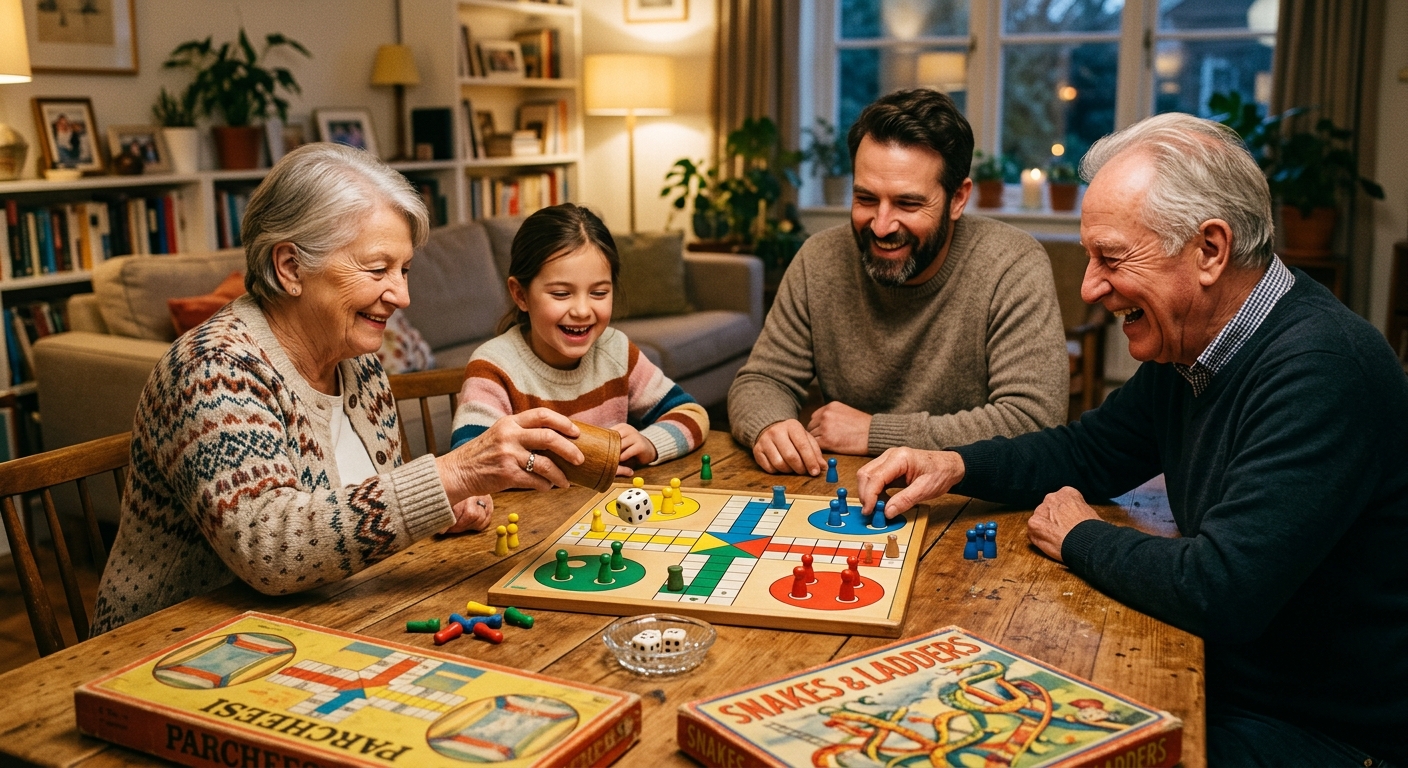
Ludo and the Classic Dice Games That Shaped Family Play Around the World
Trace Ludo's origins from ancient Pachisi to its global variants and learn why dice-driven board games have been uniting families across cultures for centuries.
Strategy, rules and history for every board on the site - how safe squares really work, when a blockade is worth holding, and what actually separates Pachisi from Parcheesi from Uckers. Written for people who want to win the next race, not just read about it.
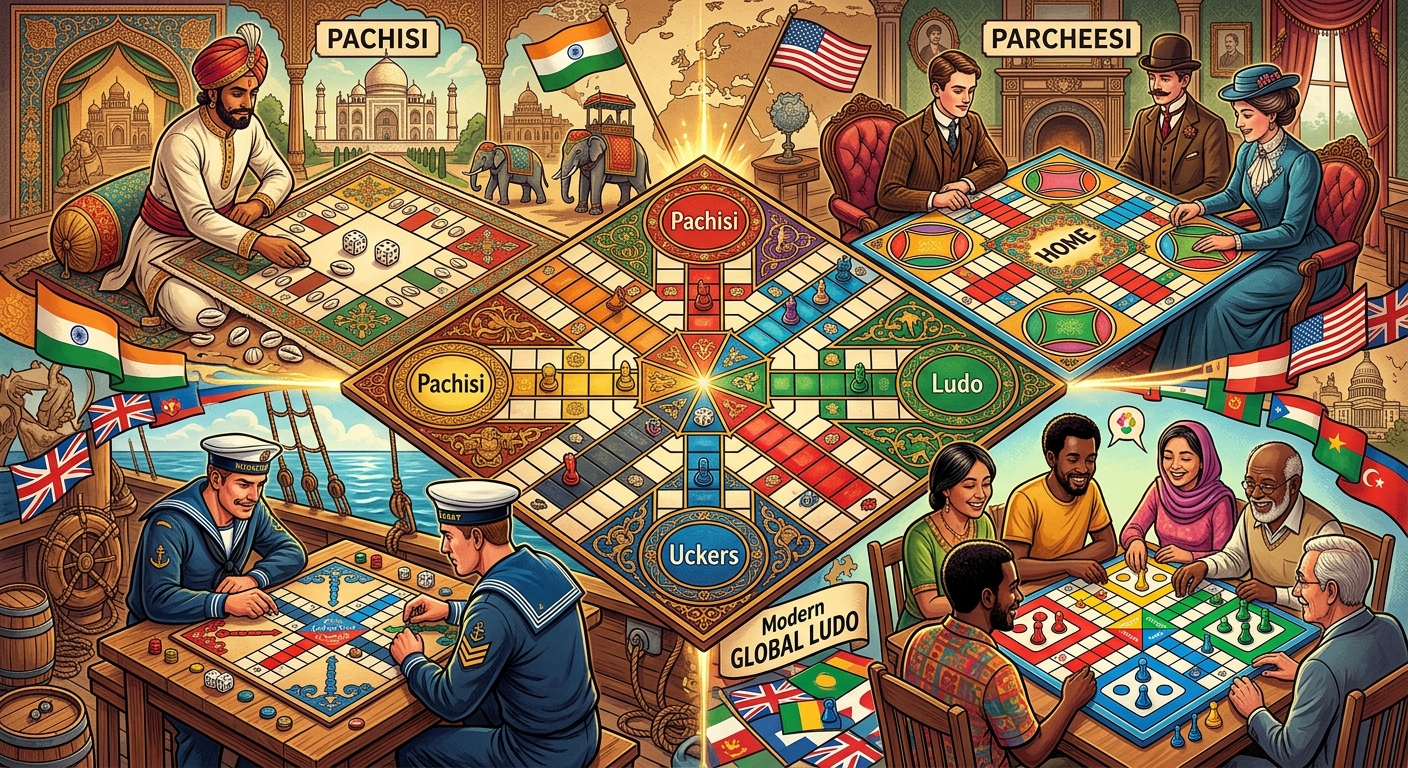
From Pachisi to Uckers, learn what sets each Ludo variant apart and how to prepare for your first multicultural board game night.
Read the article →
Trace Ludo's origins from ancient Pachisi to its global variants and learn why dice-driven board games have been uniting families across cultures for centuries.

Run the perfect family game night with Ludo as your anchor. Learn setup tips, turn order strategy, and dice warm-up games that work across all ages.
Ludo was patented in 1896 as a simplified Pachisi. What the cowrie shells changed, why Parcheesi's two dice add real agency, and why the Navy's Uckers is the most strategic game in the family.
A token can only be captured from within six squares behind it, which turns vague exposure into a number you can count. Blocking, when to release a new token, spreading versus stacking, and when to decline a capture.