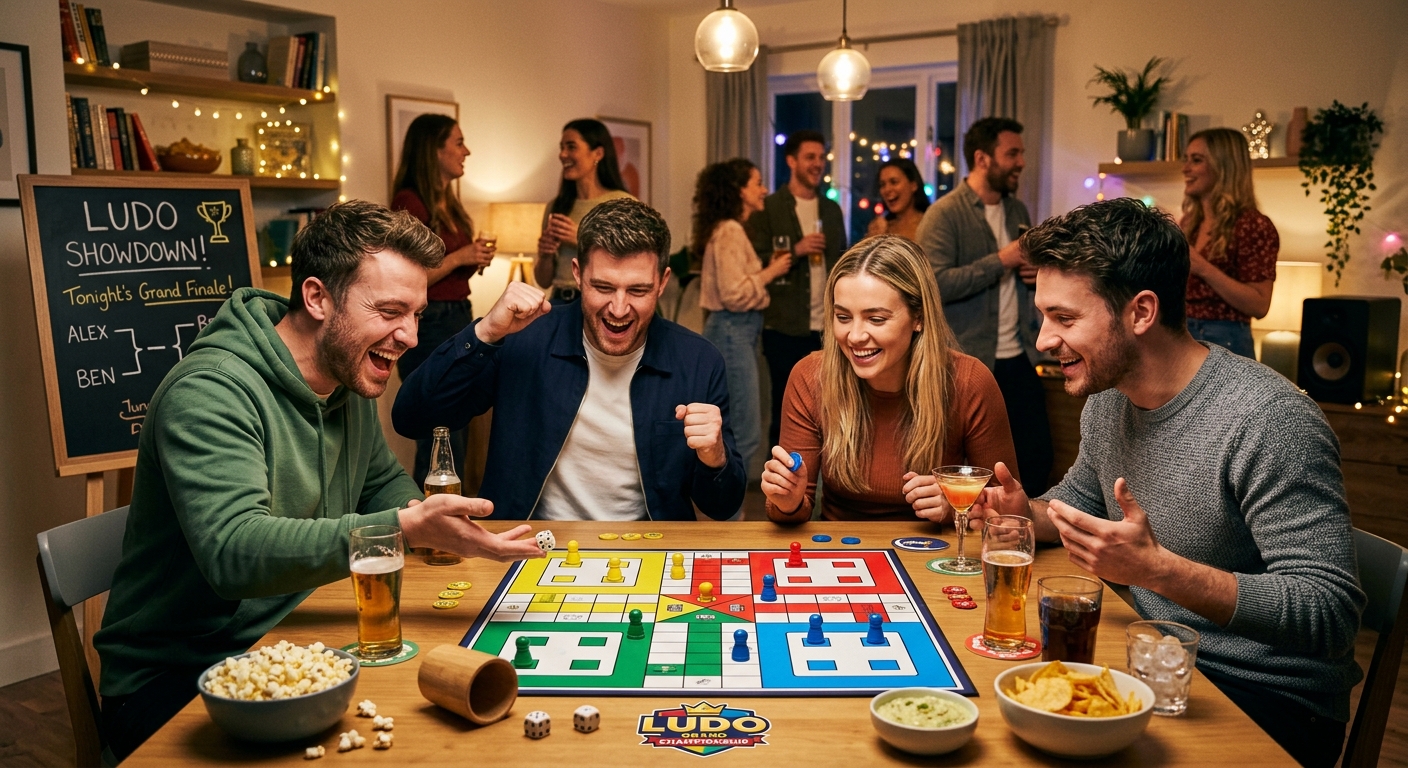
One pawn reaches the home stretch. Another sits within capture range. Your friend reaches for the die, and suddenly everyone stops talking. That is the moment a casual Ludo night starts to feel competitive. You do not need prizes, complicated scoring, or a room full of experienced players to create it. You need clear rules, meaningful choices, and enough room for people to enjoy each other between turns.
For adults who grew up playing Ludo, the familiar board makes an easy starting point. Beginners can join without learning a huge rulebook. Experienced players still have decisions to make. The challenge for a host is turning that shared familiarity into an evening with momentum, fair competition, and a reason to stay involved after a rough roll.
Your Game Night Blueprint
- Agree on one rule set before anyone rolls.
- Reward results across several games to soften a single unlucky finish.
- Keep turns moving while giving every player room to participate.
Set the Rules Before the Rivalries Begin
The fastest way to spoil a competitive evening is to argue about a rule halfway through a game. People often arrive with different memories of how Ludo works. One household grants an extra turn after a capture. Another does not. Some versions permit defensive blocks. Others handle shared spaces differently.
Choose the rules for the board or digital version you are using. Then explain any house changes before play starts. If you are playing online, check which settings the platform actually supports. A verbal agreement cannot change moves that software permits or prevents.
Keep your opening explanation focused on decisions that can cause disputes. Players need to know how pawns enter play, what happens after a six, which spaces protect a pawn, and how a pawn finishes. Make the agreed rules visible on a small card or shared screen.
- Entry and extra turns: Confirm the roll needed to enter play and which events award another turn.
- Captures and shared spaces: Explain safe spaces, stacking, and any blocking rules your version uses.
- Finishing and disputes: Confirm whether an exact roll is required and how unclear situations will be settled.
A useful agreement is that a settled ruling applies for the rest of that game. Discuss possible changes between rounds. This keeps players from rewriting a rule because it suddenly hurts their position.
Add Competitive House Rules With a Clear Purpose
Good house rules solve a problem. They can reduce delays, spread attention across the board, or make repeated games more interesting. Adding rules just to make Ludo feel serious usually creates more administration than excitement.
A gentle turn limit is one option. Give players around 20 seconds to choose a move after rolling, with more time during their first game. Treat this as a pacing agreement. If someone needs help reading the board or moving pieces, allow it without a penalty.
You can also limit coaching once a player understands the basics. Explain legal moves freely, but let the person holding the die choose their own strategy. A competitive result means more when each player makes their own decisions.
Choose a Format That Fits Your Guests
| Format | How It Works | Best Fit |
|---|---|---|
| Single Game | Play one agreed rule set and celebrate the winner. | A shorter gathering or a first session. |
| Points Series | Award points for finishing positions across several games. | A regular group that enjoys an ongoing contest. |
| Rotating Tables | Change opponents between rounds and track results. | A larger gathering with multiple boards or devices. |
For a four-player points series, a simple scoring system is four points for first place, three for second, two for third, and one for fourth. Use it only if your group plans to play out every finishing position. Decide how ties will work before the first round. Sharing the title is a perfectly reasonable choice when there is no time for a playoff.
Make Better Moves Without Turning Every Turn Into a Lecture
Ludo includes luck, but the choice of which pawn to move still matters. A player who always pushes the leading pawn may leave the rest stranded. A player who chases every capture may miss a safer route toward home.
Before moving, consider what the roll changes. Can you bring another pawn into play? Can you reach a protected space? Can you capture an opponent without exposing a more valuable pawn? These questions turn a familiar game into a contest of small judgments.
Count distances before choosing a capture. Sending an opponent back can be useful, especially when that pawn has made substantial progress. Yet landing within easy reach of another rival may cost you your own progress moments later. Look at the full board, including players whose turns come before yours.
Keeping several pawns active can give you more choices on future rolls. It does not guarantee a win. Sometimes advancing a pawn close to home is the stronger move. The aim is to avoid moving automatically when another legal option deserves attention.
During a beginner's first game, explain these choices without directing every turn. Ask whether they want help. Afterward, talk through an interesting move over snacks. Strategy is easier to absorb when it feels like a shared conversation.
Build an Evening Around Ludo's Natural Pauses
Ludo does not demand constant action from everyone at once. Between turns, guests can chat, reach for food, or watch a developing rivalry. That relaxed rhythm makes it a useful anchor for a wider evening of social entertainment.
Keep food away from the playing area and choose a break between games. An interruption during a tense finish can drain the excitement. A planned pause gives people time to stretch, refill drinks, and return ready for another round.
Some adult groups rotate Ludo alongside group drinking games as part of a wider lineup. Keep participation optional, with alcohol-free choices available. Ludo scores can remain separate, allowing guests to join different activities without affecting the main competition.
A change of pace also helps guests who finish early or want a break. Offer a short conversation game or a shared music challenge while another table finishes. Keep those activities easy to leave so the next Ludo round can start without gathering people from a lengthy second game.
Manage Multiplayer Tension Before It Becomes Personal
Captures are part of the fun. Repeatedly targeting the same person can feel different, especially if that person is learning. You cannot promise that everyone will have an easy game. You can set a tone where tactical choices stay on the board.
Encourage players to explain a move in terms of position. “Your pawn was closest to finishing” lands differently from a running joke about always attacking one guest. Friendly teasing works best when everyone involved enjoys it.
Temporary cooperation can also create friction. Two players may both benefit from slowing the leader, but that does not make them a formal team. For an individual tournament, agree that each player controls their own moves. Nobody owes another player a capture, a favor, or a spared pawn.
- Keep decisions with the player: Suggestions should not become pressure from the rest of the table.
- Spread attention around: Give quieter guests space to speak and celebrate their strong moves.
- Reset between games: Rotate seats or starting order where your version allows it, and leave earlier grudges behind.
If a dispute starts, pause briefly and return to the agreed rule. Avoid holding a vote on whether someone's perfectly legal move was too harsh. Competitive play needs room for a disappointing result without treating it as a personal insult.
Use Turn-Based Play to Welcome Different Ages and Experience Levels
Ludo's turn structure gives each player a clear moment to act. A fast talker cannot take extra moves by answering first. A newcomer does not need to match someone else's reflexes. Everyone can watch a move resolve before the next player starts.
That makes the format useful for mixed-age and mixed-experience groups. Younger players can practice counting spaces. Adults returning after years away can relearn the rules as the board develops. Experienced players can think about threats while waiting for their turns.
The host still needs to make participation comfortable. Use pieces that are easy to distinguish. Read out dice results if needed. Let someone request help counting a route without giving away their decision. On shared devices, position the screen where everyone can see it.
A practice round can remove pressure before scoring begins. Keep it short enough to demonstrate entry, movement, and capture. Explain the home route too, even if nobody reaches it during practice.
Once competitive play starts, apply the same agreed rules to everyone. Adjust the pace and assistance to the guests, rather than quietly changing legal moves for one person. Players should understand what help is available and feel comfortable asking for it.
Finish With a Winner and a Reason to Return
Set an end point before the evening stretches too far. You might play a fixed number of games or announce that the next round will be the last. Leave enough time to finish it. Starting another full game just as guests need to leave creates an avoidable scoring problem.
Keep any prize modest. Choosing the next game night's music, taking home a small trophy, or earning a handwritten champion card gives the winner something to enjoy without making every unlucky roll feel expensive.
Celebrate moments beyond the final standings. A patient route home, a bold capture, or a beginner spotting a threat can become the story people remember. Those moments give more guests a stake in the evening than a winner's name alone.
The best competitive Ludo nights end with people wanting another match. Clear rules make the contest fair. Thoughtful moves give it tension. Conversation fills the pauses. Put those pieces in place, and a familiar board can carry an entire evening of friendly rivalry.